


Training course for Adaptive Ski Trainer for people with disabilities | Bi-Ski & Standup Skiing
from 12. – 19.12.2026
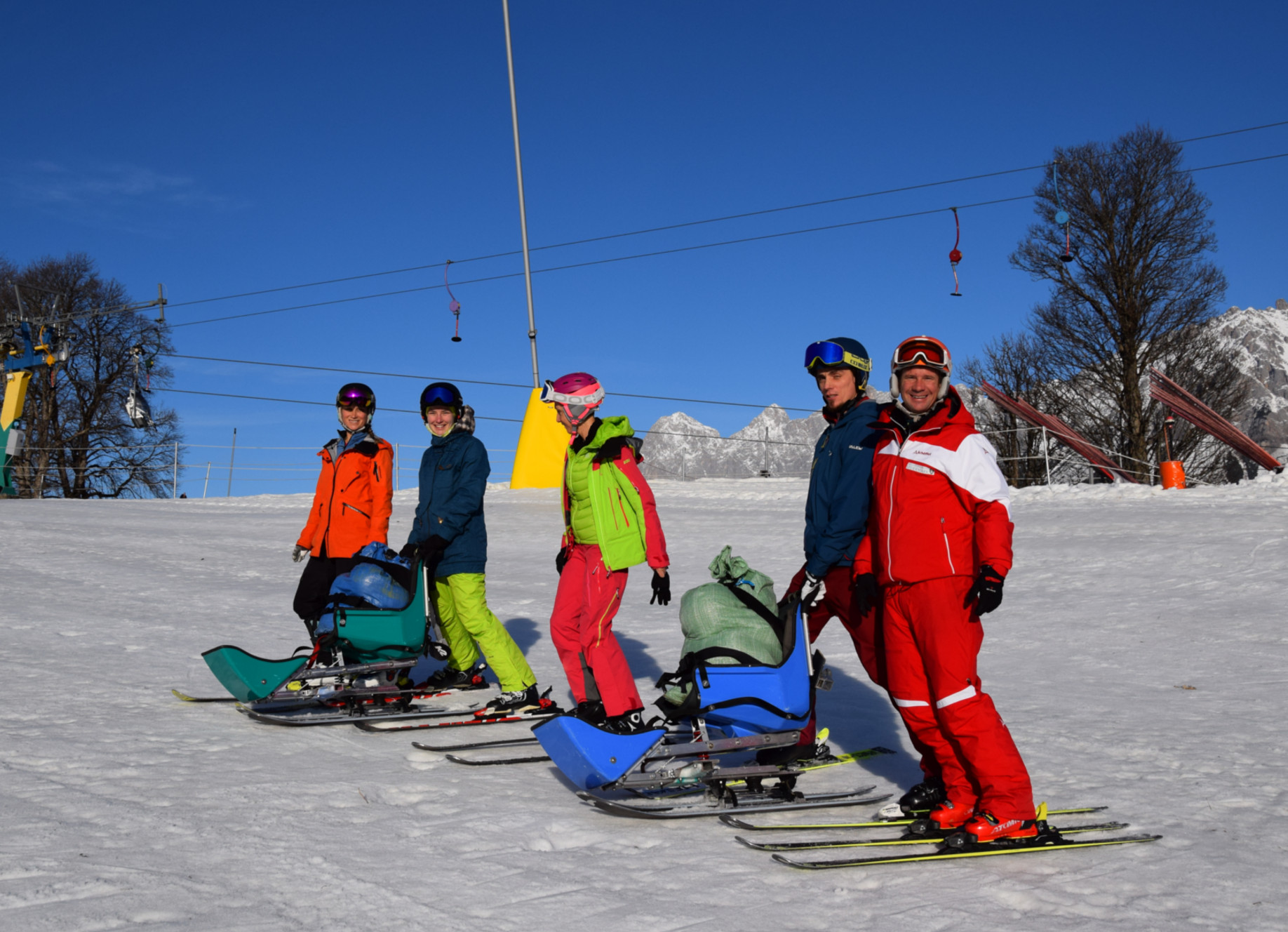
This training provides practical knowledge and experience in adaptive skiing for people with disabilities in the following areas:
- Bi-Ski (Bucket-Assist, Bi-Ski with fixed rigger, Bi-Ski with outrigger)
- Skiing standing up (learning disabilities, hemiplegia, stroke, multiple sclerosis, etc.)
Focus areas:
- Safe handling of disability-specific sports equipment
- Safety and risk awareness in adaptive skiing
- Basics of responsible assistance for people with disabilities while skiing
- Further development of personal skiing skills
Who is this association training suitable for?
The training is intended for:
- Association members
- Individuals with good skiing experience who wish to get involved in inclusive winter sports programs
- Volunteer ski trainers
- Individuals with existing ski instructor training can use this course as supplementary awareness training for working with people with disabilities.
(This training does not extend or replace any legally regulated ski instructor qualification.)


Adaptive Ski Trainer for People with Disabilities | Bi-Ski & Standing Skiing
Date: 12. – 19. December 2026
Course fee: € 980,00
Registration: Please send an email to: info@freizeit-pso.com
Lift costs: see tickets at Planai Schladming
Accommodation: please organize this yourself, PSO will be happy to assist you in finding affordable accommodation
Questions: If you have any further questions about the registration, course content and schedule or payment etc. please contact Freizeit-PSO directly: info@freizeit-pso.com, +43 (0) 650 / 901 62 94.
Adaptive Ski Trainer for People with Disabilities | Bi-Ski & Standing Skiing
Duration: 12. – 19. December 2026, 8 days (practical and theoretical units: 7 days, practical and theoretical knowledge assessment: 1 day),
Content of the Association Training:
This training provides practical knowledge and experience in safely learning the two disciplines: Bi-Ski and Standing Skiing. The goal is to improve personal safety and competence in handling these assistive devices and to strengthen the ability to safely support people with disabilities while skiing.
Targets of the course:
- To learn the 2 disciplines Bi-Ski and its 3 sub-disciplines Bucket-Assist, Bi-Ski with crutch ski, Bi-Ski with fixed outriggers and standing skiing safely (to be able to ski on your own).
- to safely supervise disabled persons in the 2 disciplines Bi-Ski and its 3 sub-disciplines Bucket-Assist, Bi-Ski with crutch ski, Bi-Ski with fixed outrigger and standing skiing
- Lesson level up to dynamic short and long radii on red slopes
- Good basic theoretical knowledge of the respective disabilities and their safety aspects when skiing
Course times: Planned daily course duration is from 8 am – approx. 6 pm or 7 pm.
Course location practice: Rohrmoos, course location theory: Hotel Schwaigerhof – Rohrmoos
Meeting place: Tuesday, 10.12.2025 at 8 am, Hotel Schwaigerhof – Rohrmoos
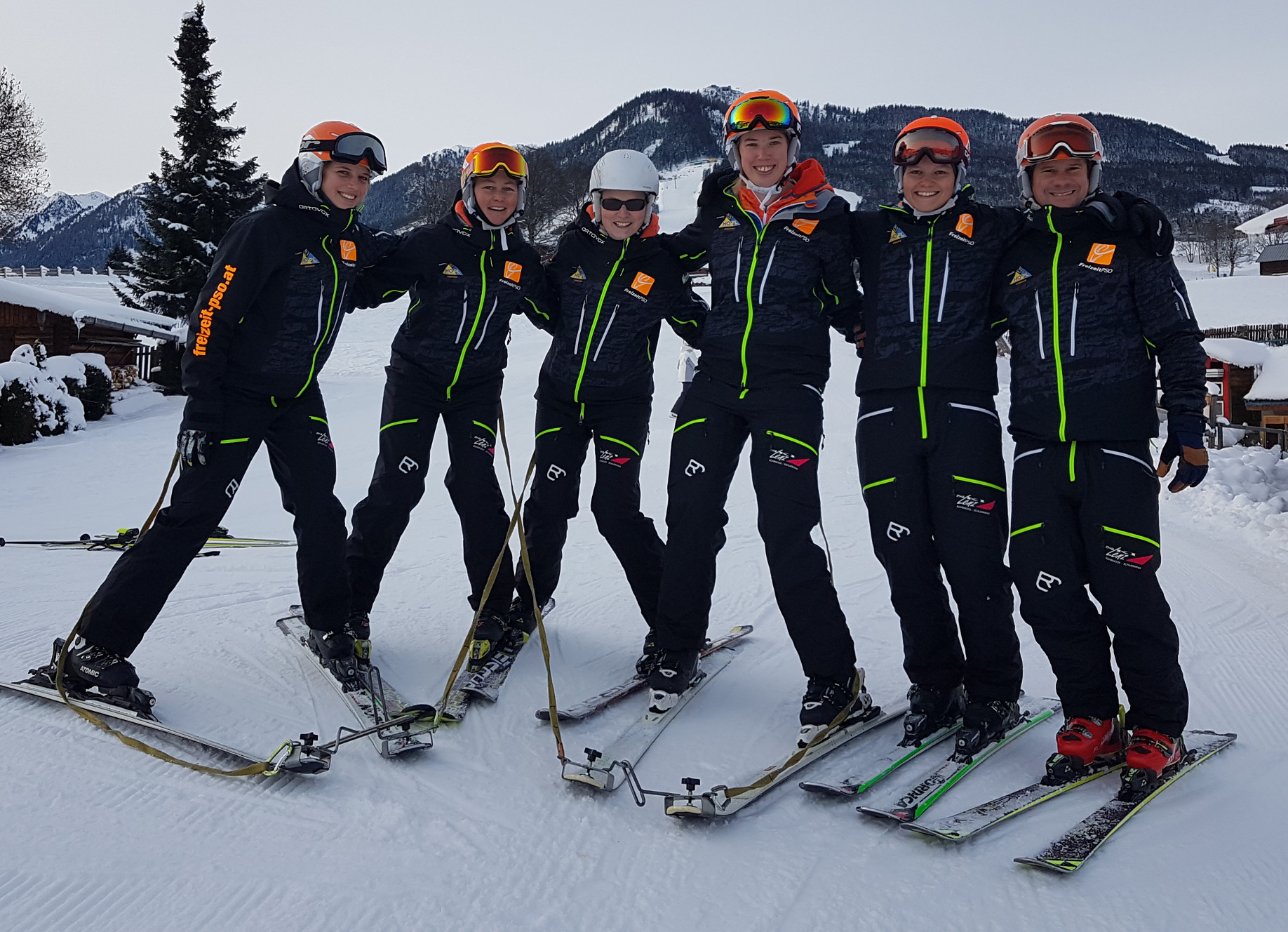
training leader: Andras Simon
To bring:
- Own ski equipment. Ski length approx. 140 – 160 cm, helmet (mandatory)
- Training materials will be provided on the first day of the course
General:
- Minimum requirement: skiing experience (proof to be clarified upon registration)
- In case of cancellation: please cancel early; travel insurance is recommended
- All content serves the practical and theoretical qualification in adaptive winter sports as an adaptive ski trainer within the framework of our association Freizeit-PSO, not as a ski instructor qualification

Standing Skiing
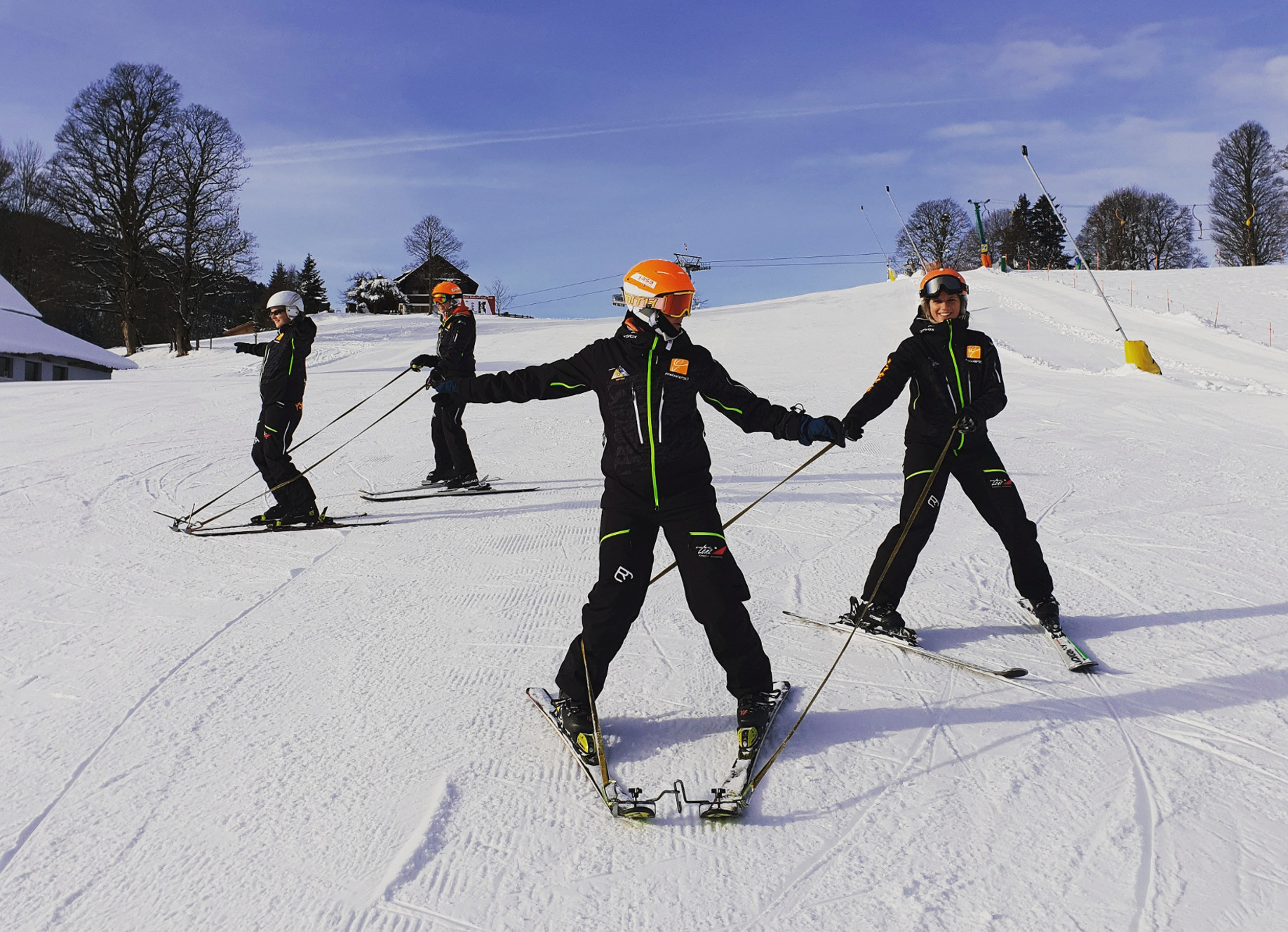
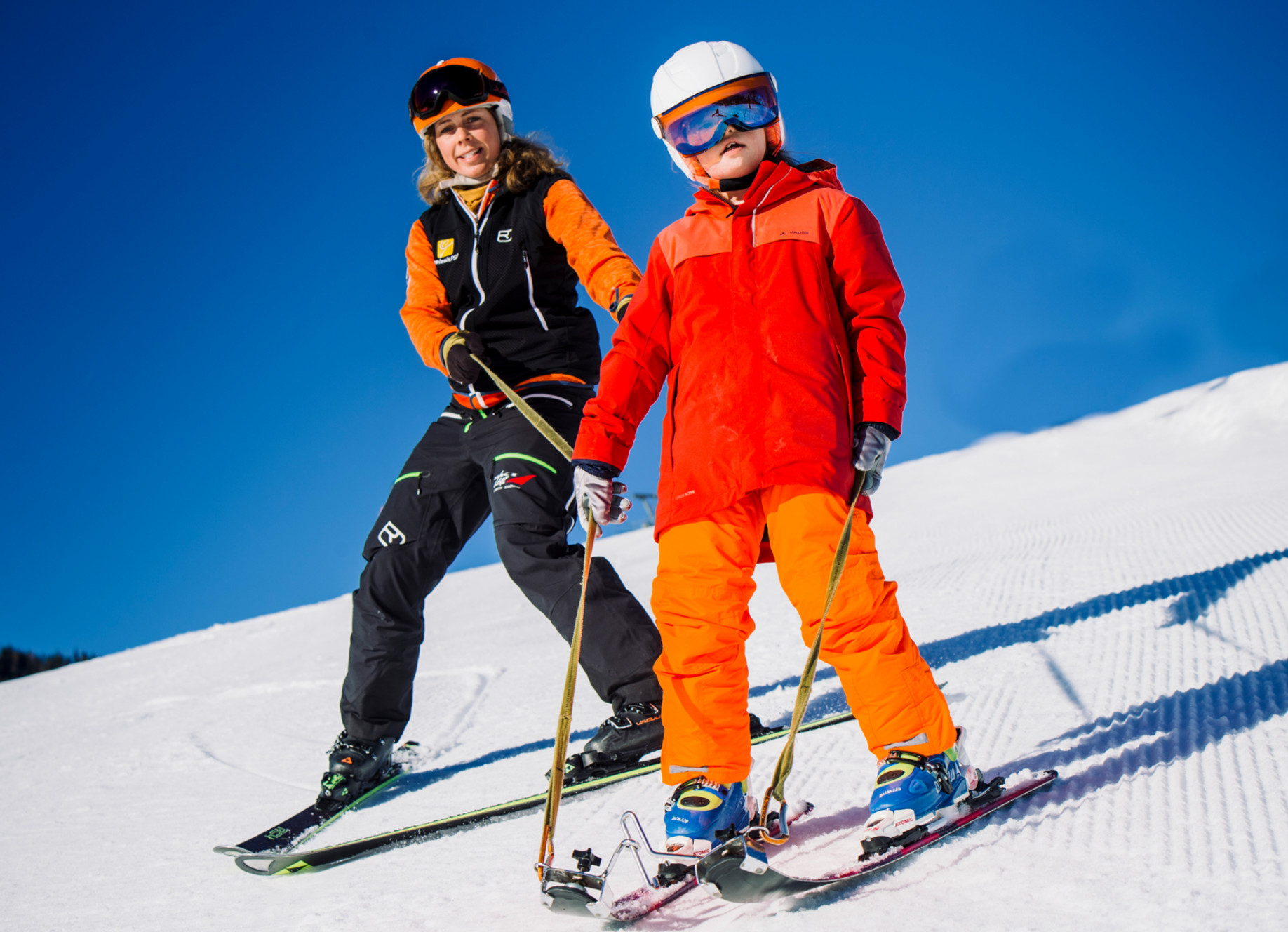
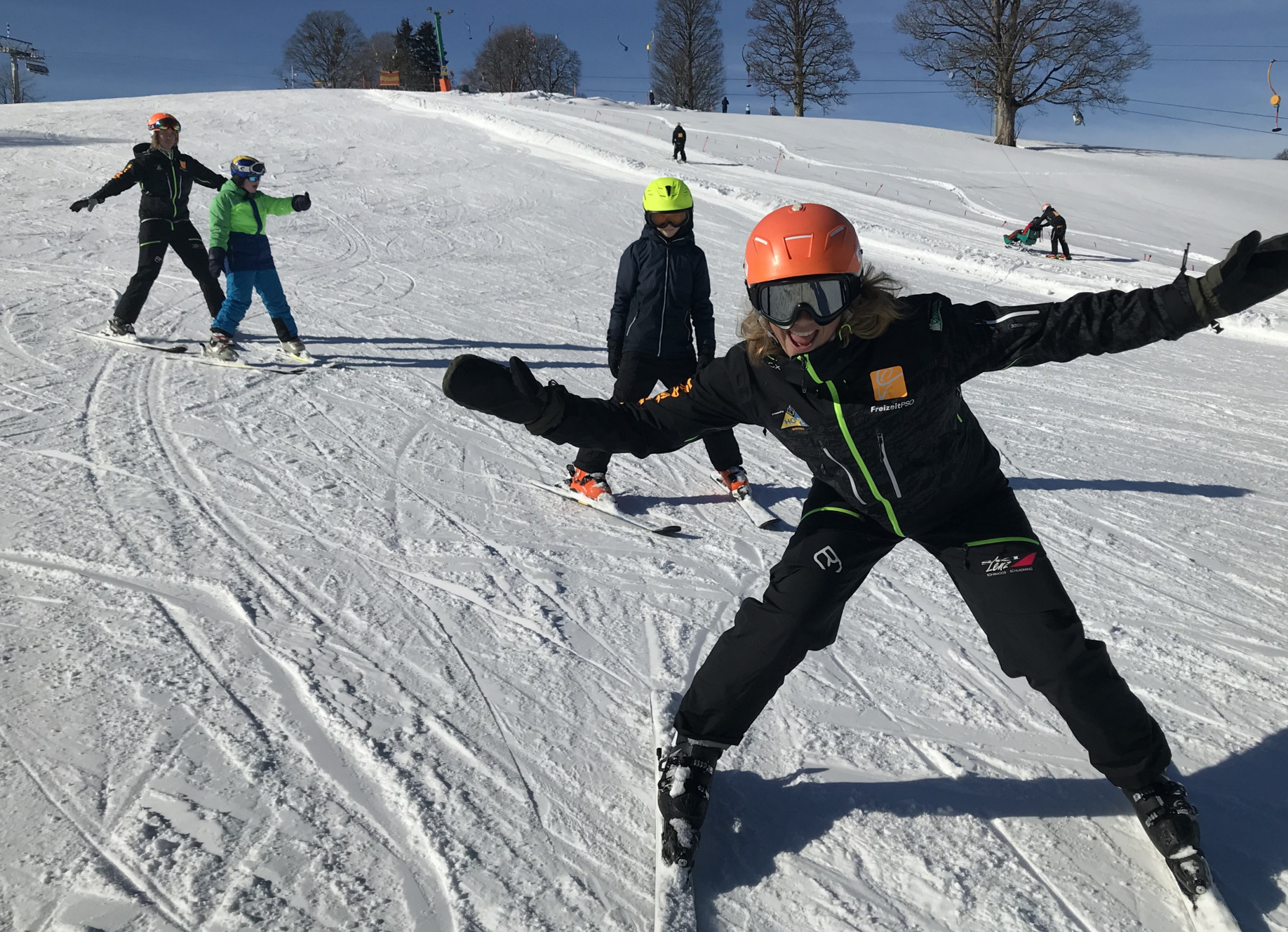
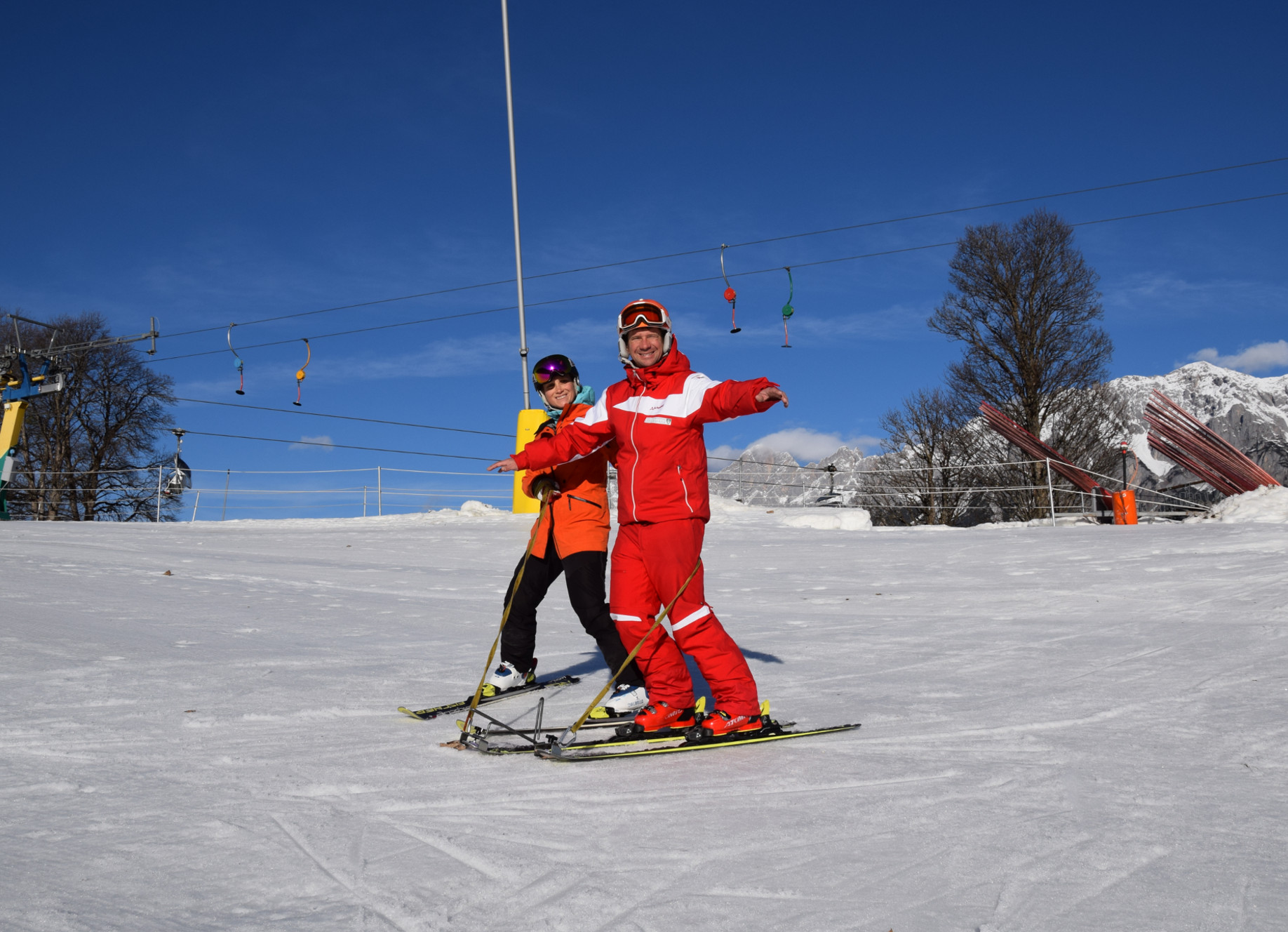
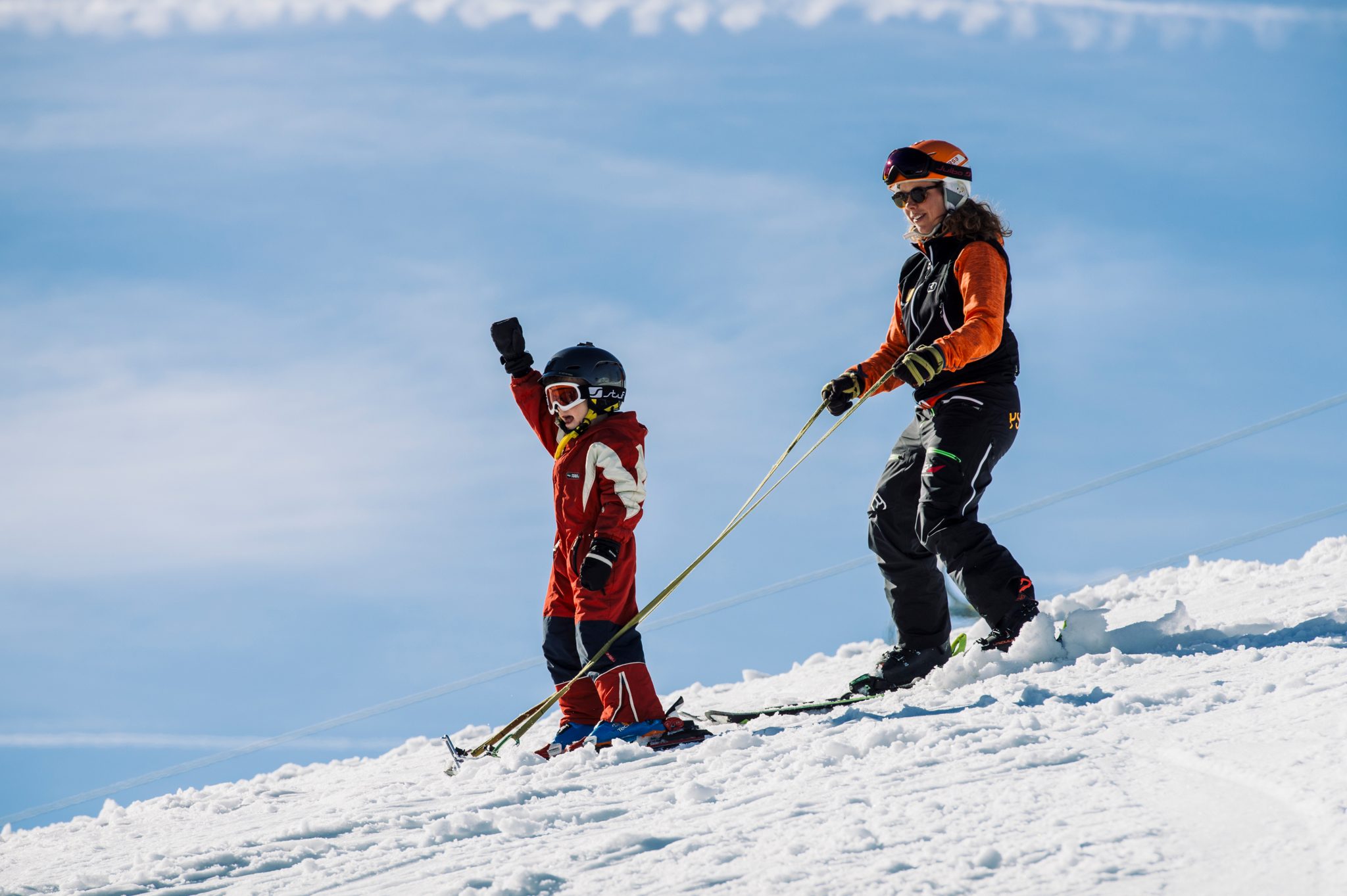
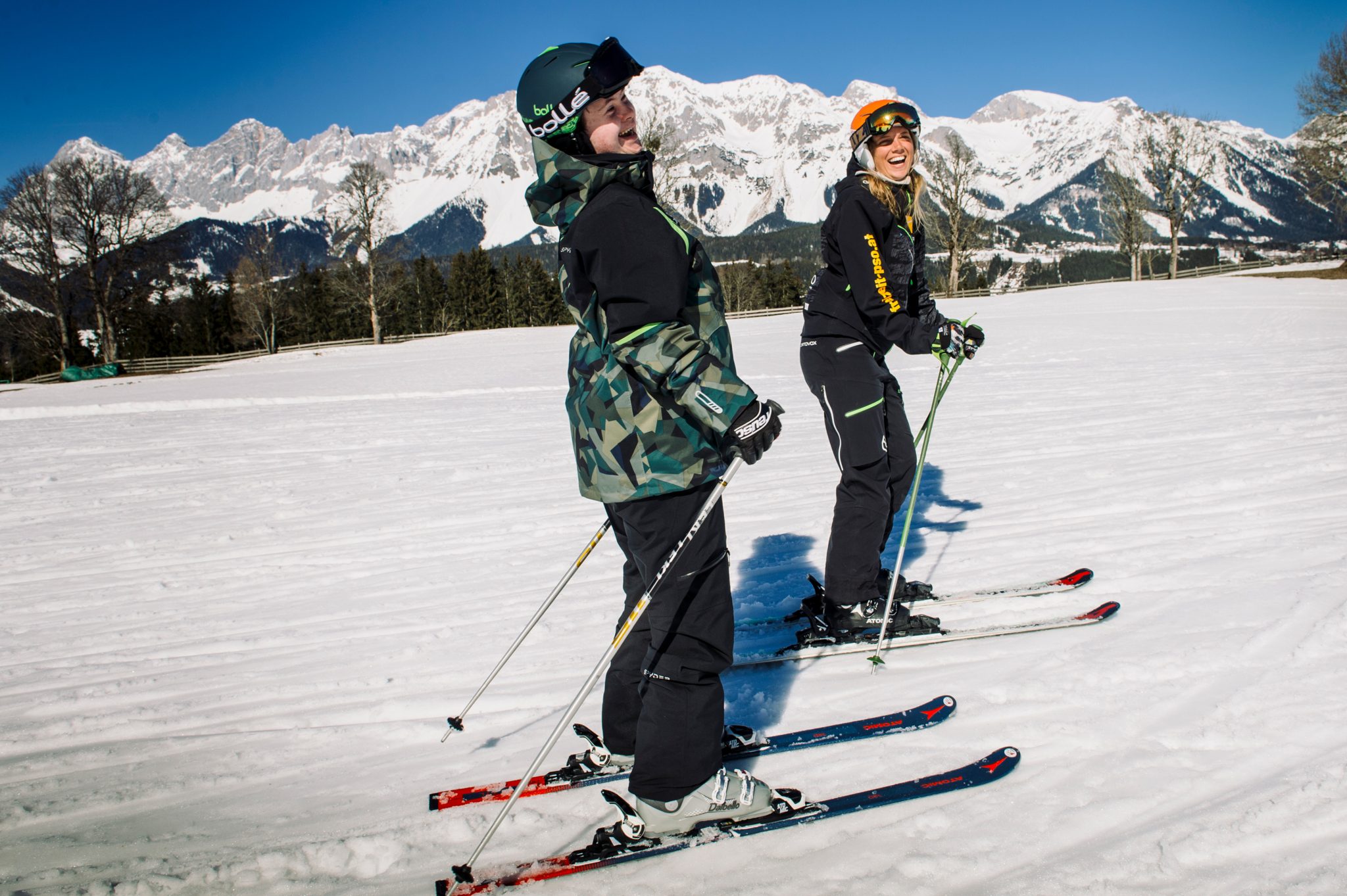
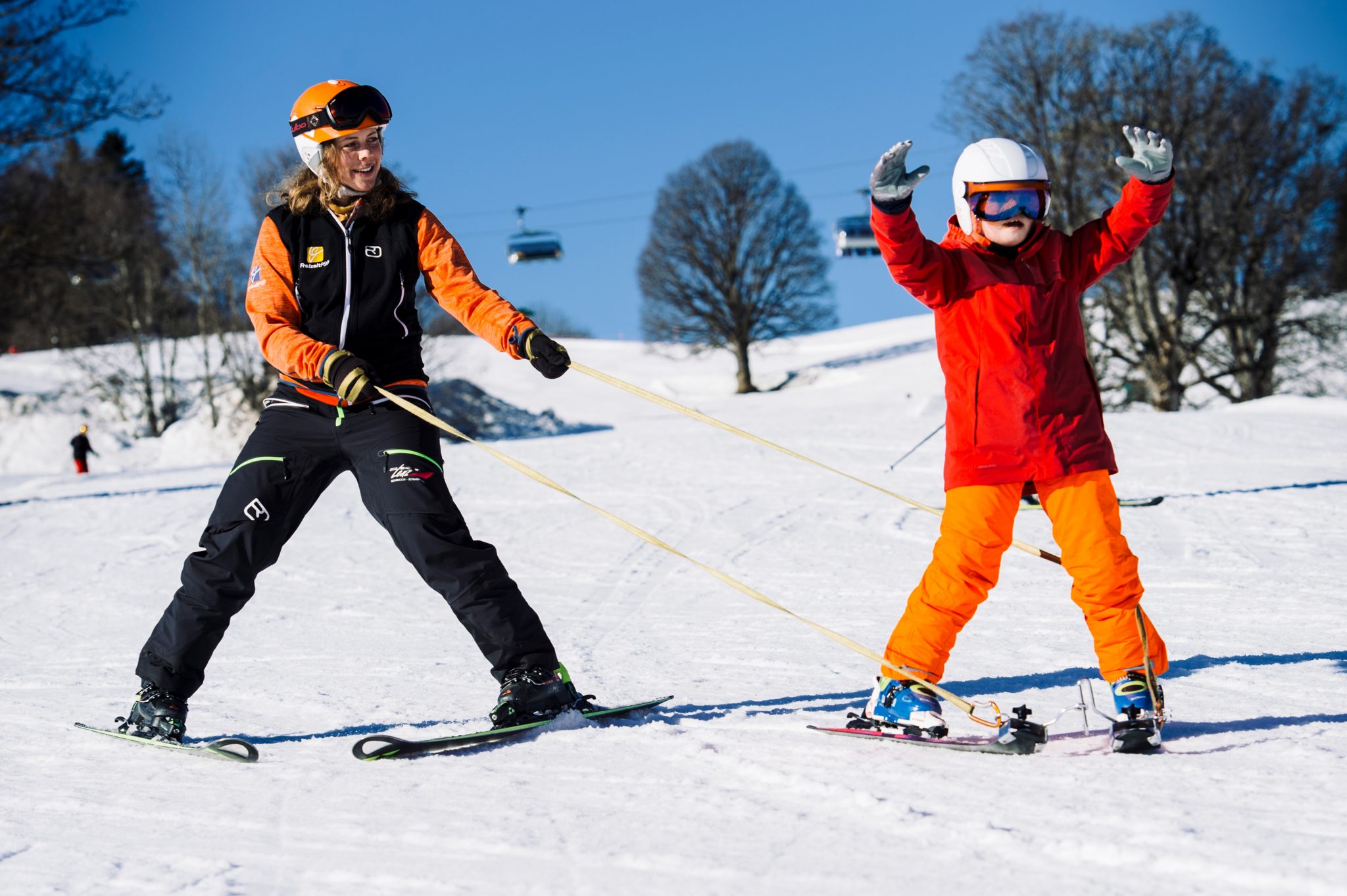
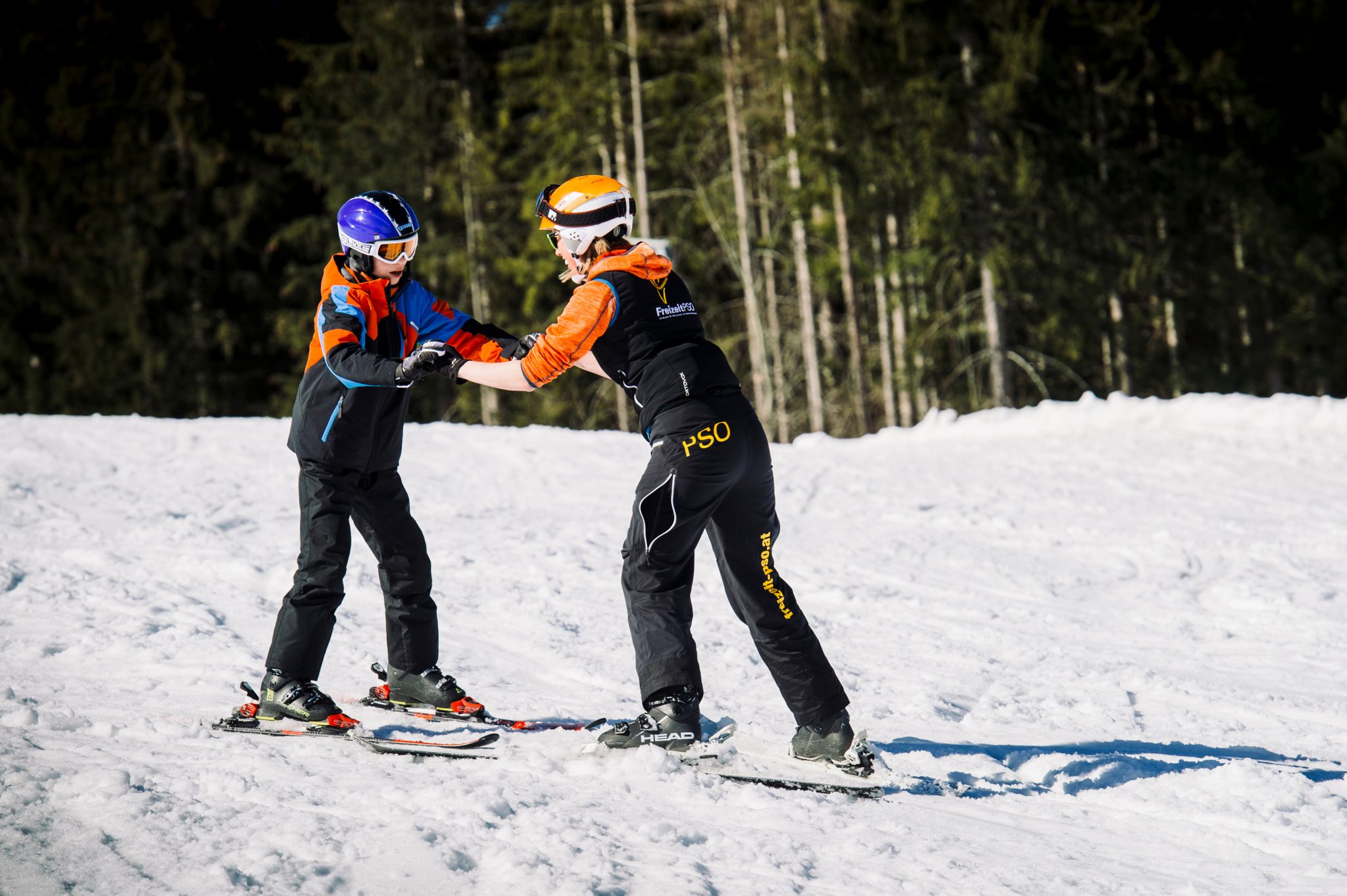
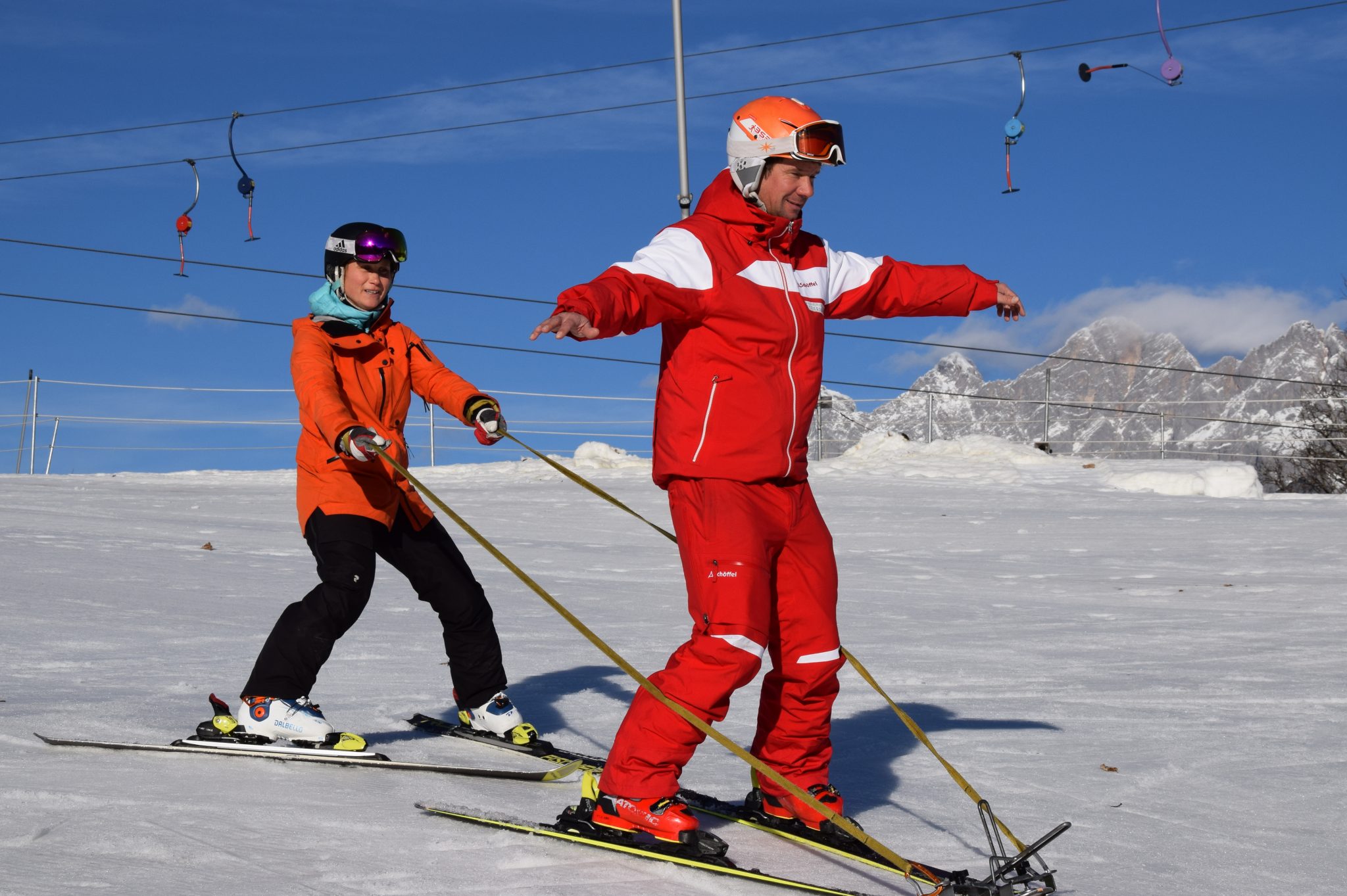
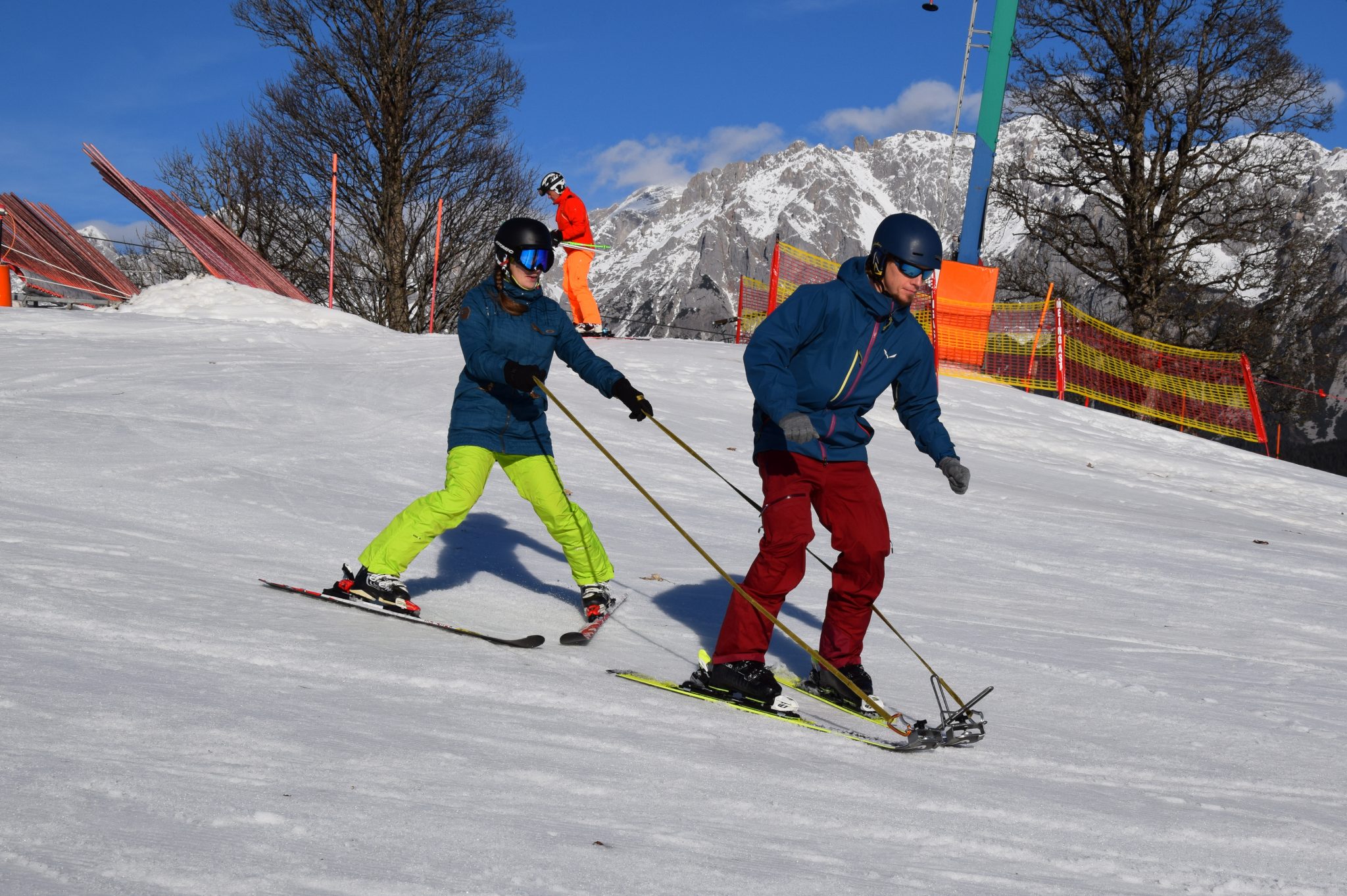
Skiing is possible for everyone, e.g. people with trisomy 21, autism, ADD and other learning disabilities! Even people with different physical disabilities can ski standing up. For example, people with a stroke, a hemiplegia, multiple sclerosis, etc.. With special aids, it is possible to automate certain movements, such as braking, and thus build up muscle memory. This means that the participants does not need to be able to follow clear instructions. Fun and safety are always at the forefront, so learning goes without saying!
During this part of the course we will learn a lot about the individual disabilities and their particularities when skiing. The practical part teaches the safe use of special equipment and numerous aids. Equipped with such theoretical and practical knowledge, it will be easy to put what you have learned into practice.
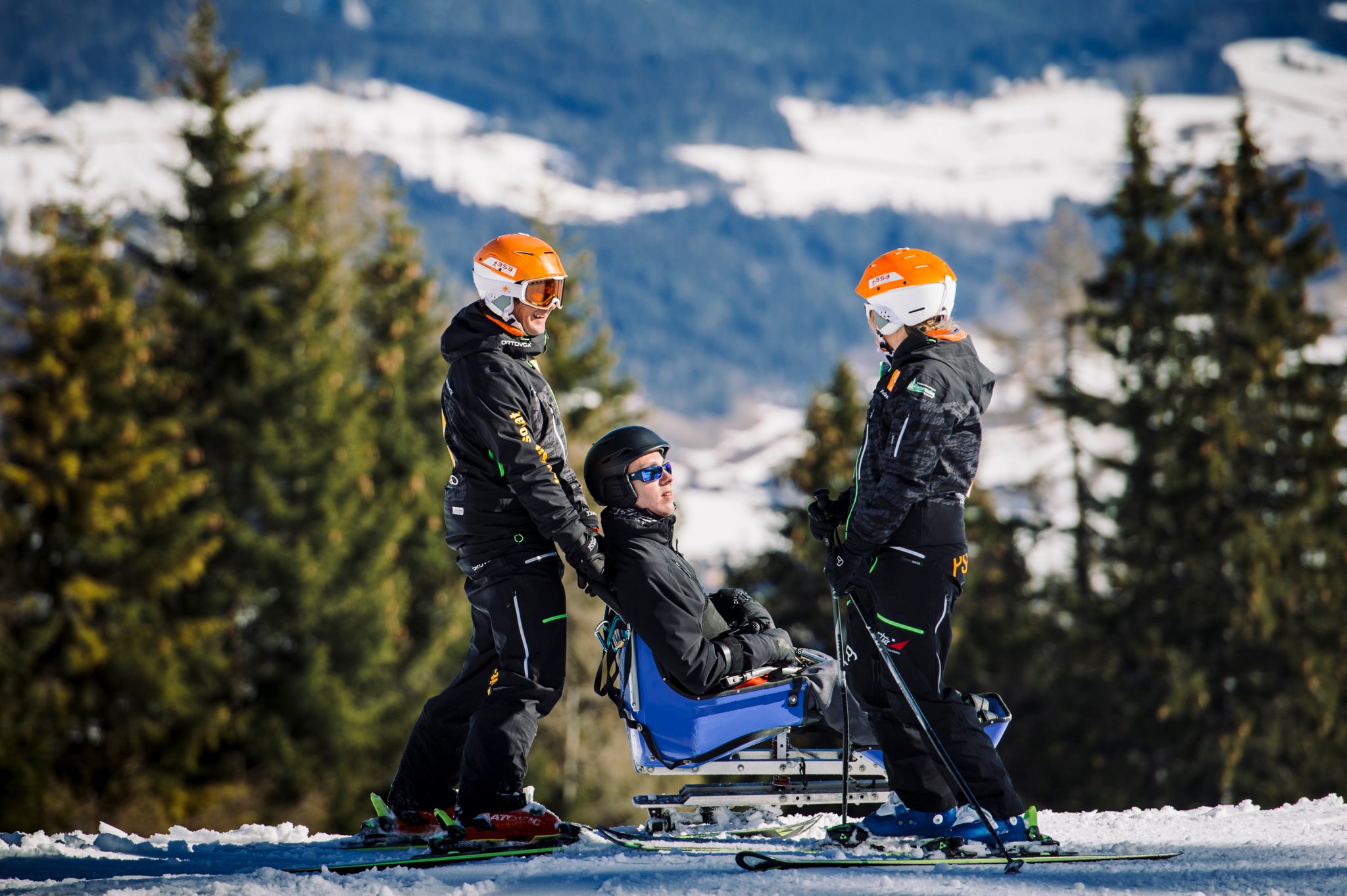
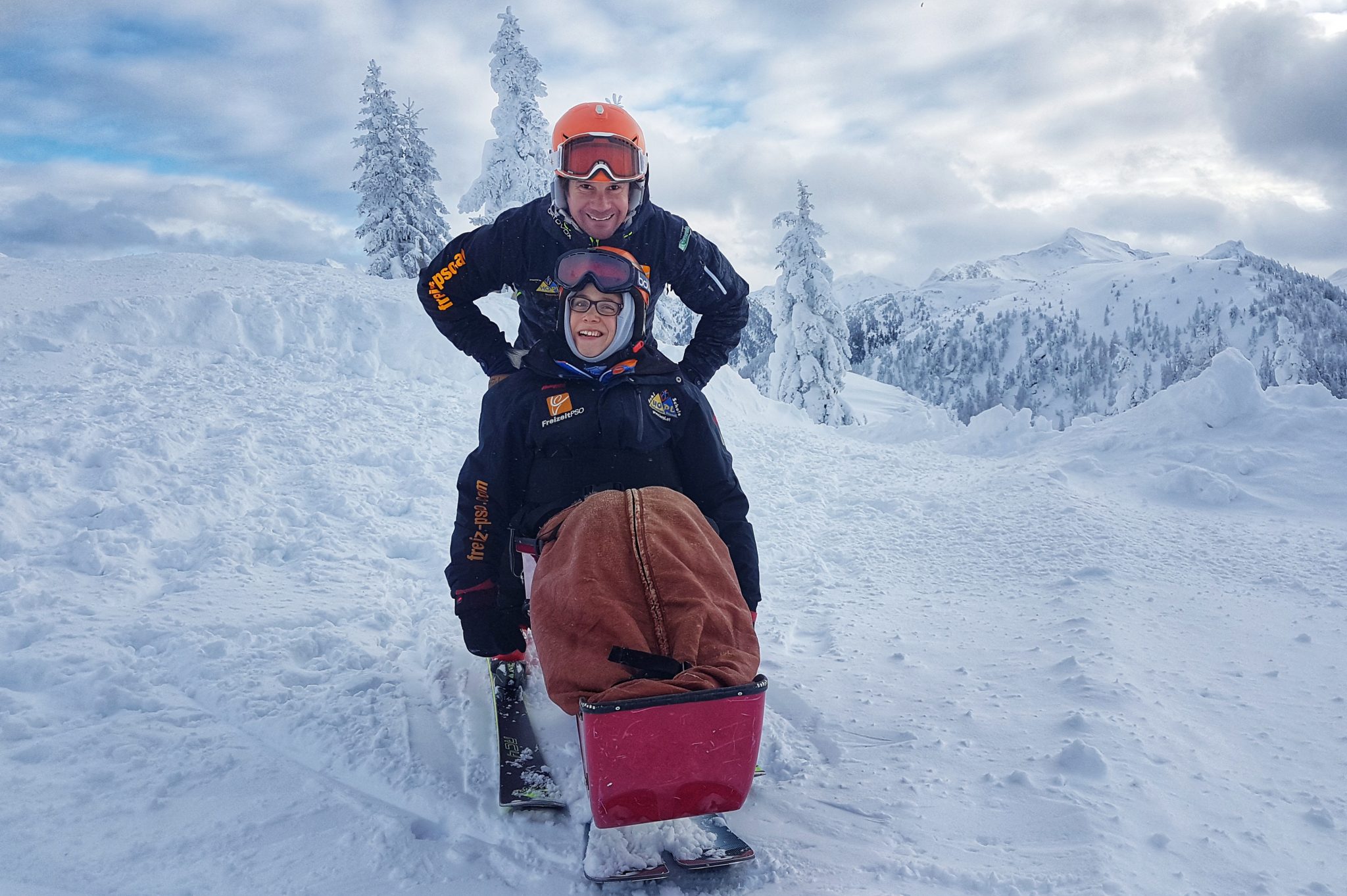

Bi-Ski – general
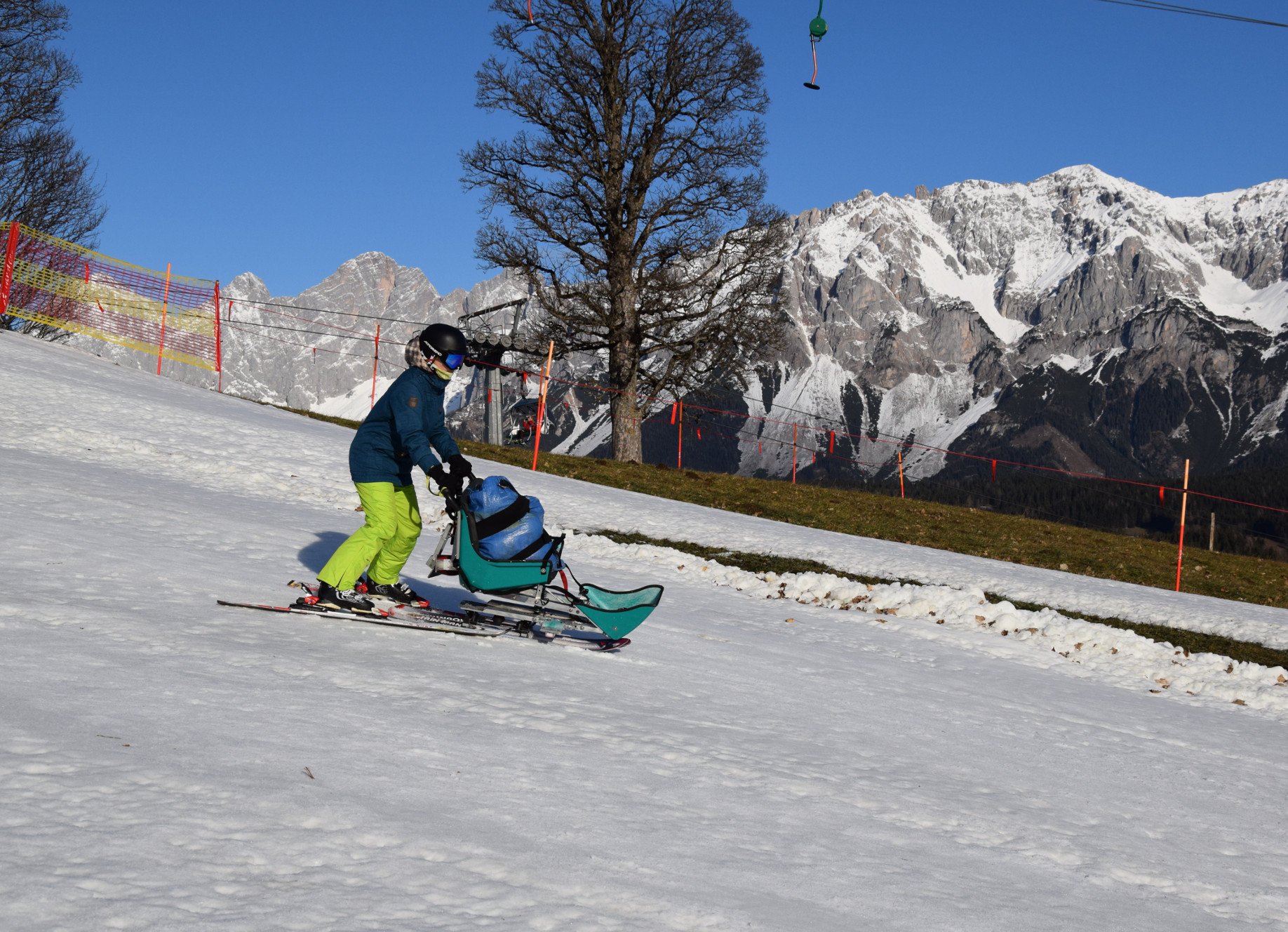
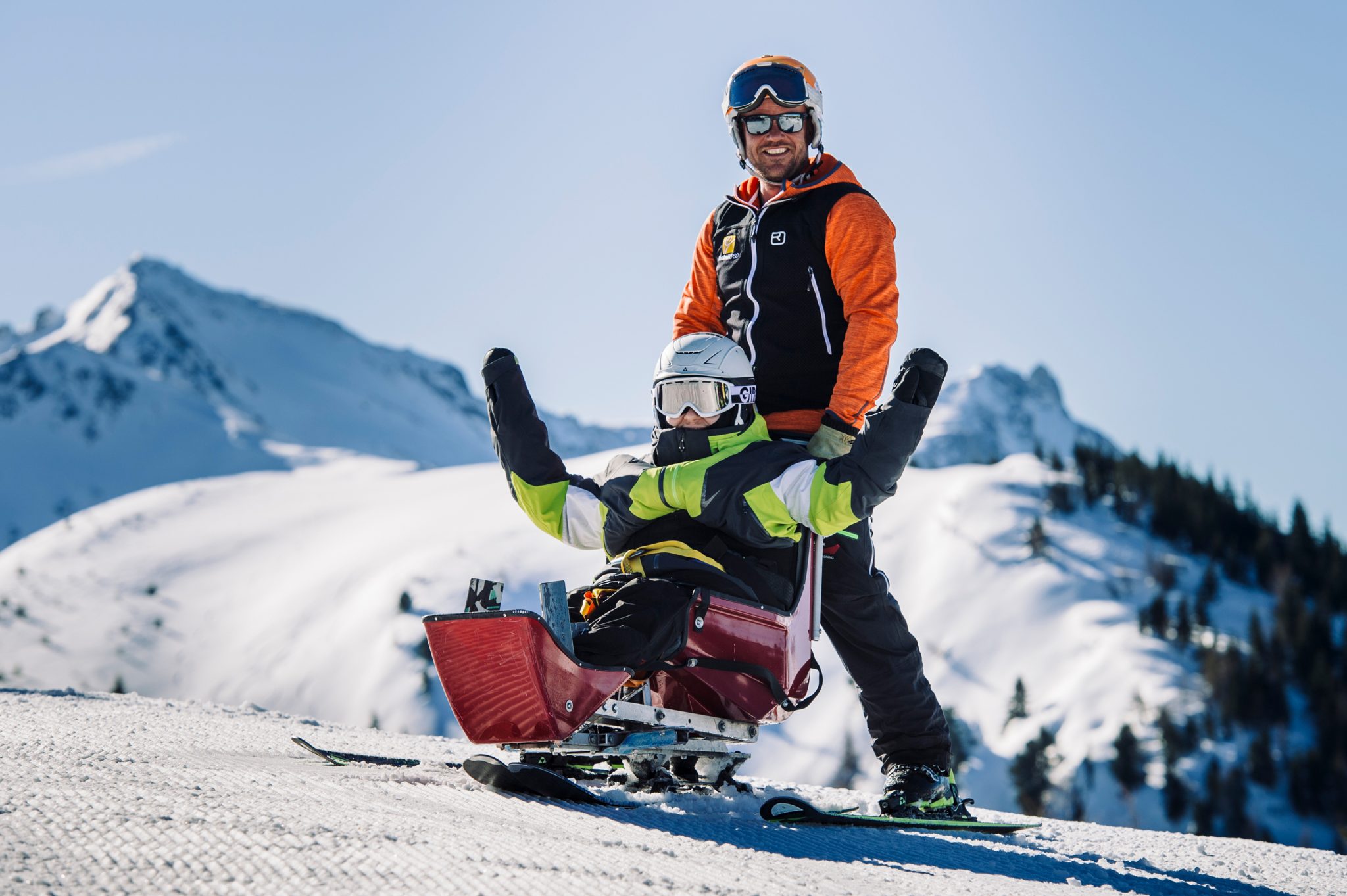
People with various disabilities can ski a Bi-Ski. It is suitable, for example, for people with spastic paralysis, hemiplegia and craniocerebral trauma! Even people with severe physical and mental disabilities can practice the popular sport with this ski with more or less the support of a ski trainer. With the highly developed technology of the different Bi-Skis nothing stands in the way of disabled skiing.
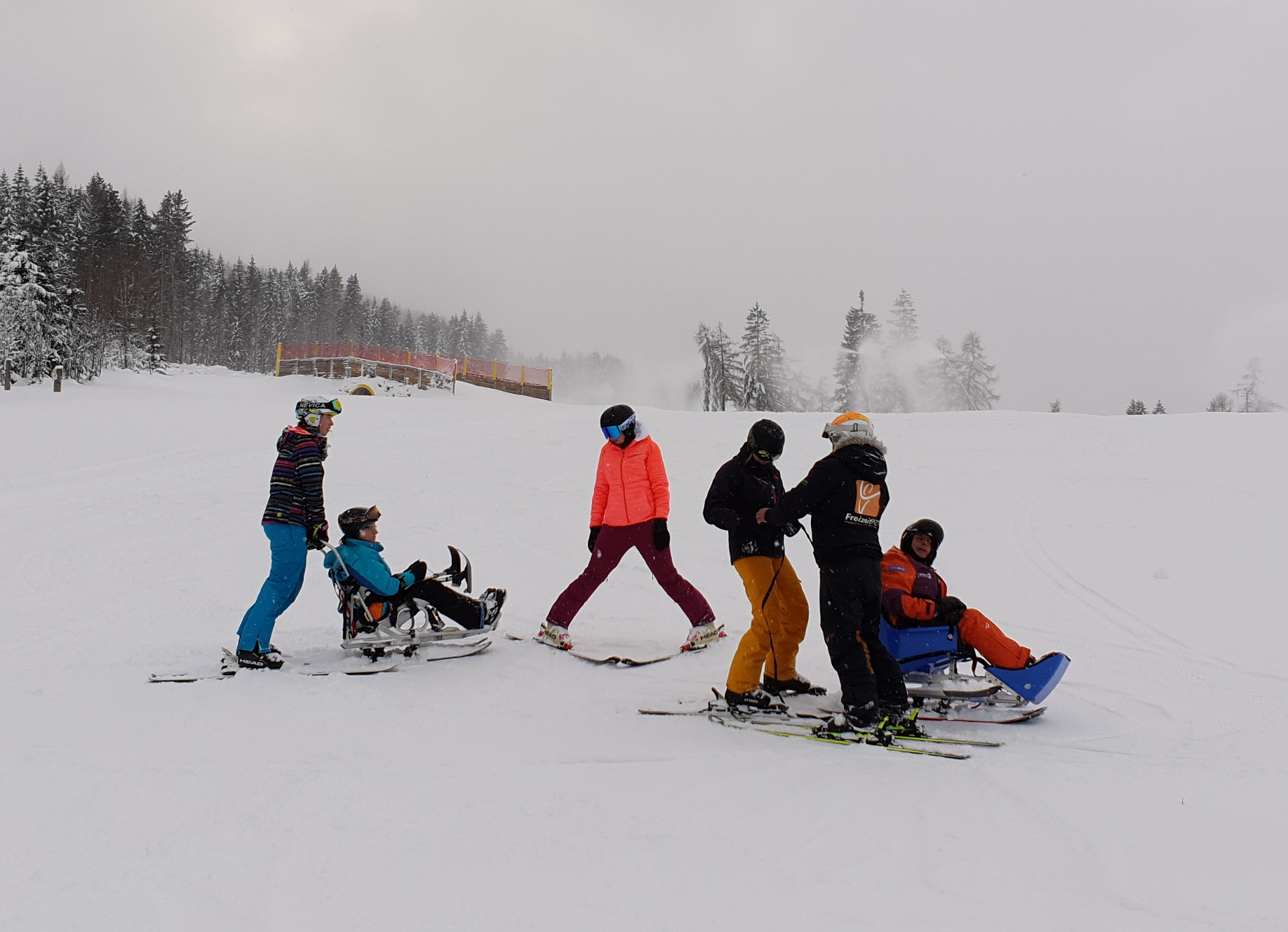
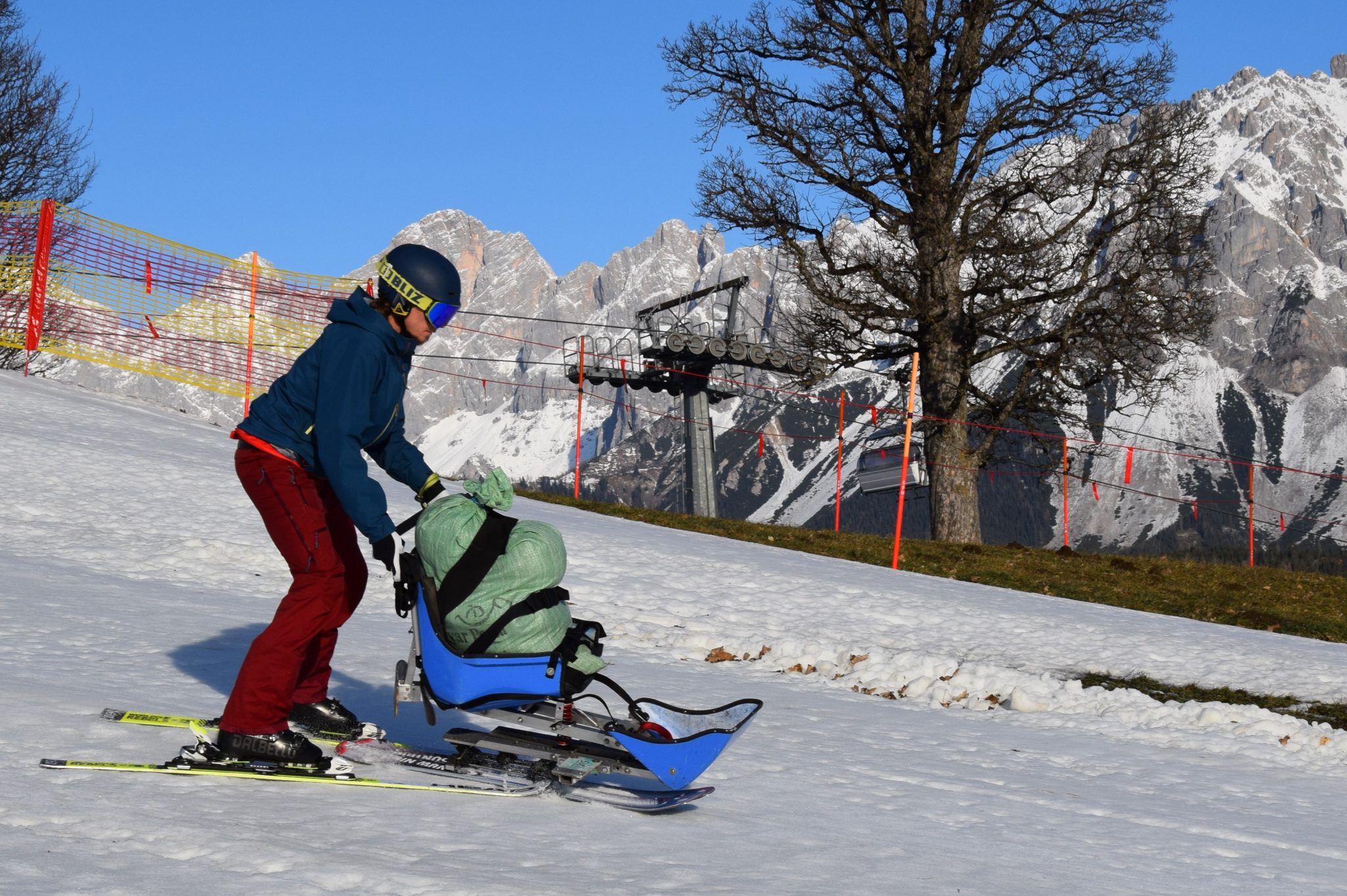
Throughout the course, a great deal will be learned about the respective handicaps and peculiarities related to skiing. Bi-Ski is one of the most varied types of sitting skiing. The different models and their advantages will be introduced and discussed in detail. Another important part of the course is the extensive practice in all 3 sub-disciplines of Bi-Skiing. Thus all participants gain a lot of routine and security as well as handicapped specific knowledge until the end of the course and can thus carry out an individual lesson.
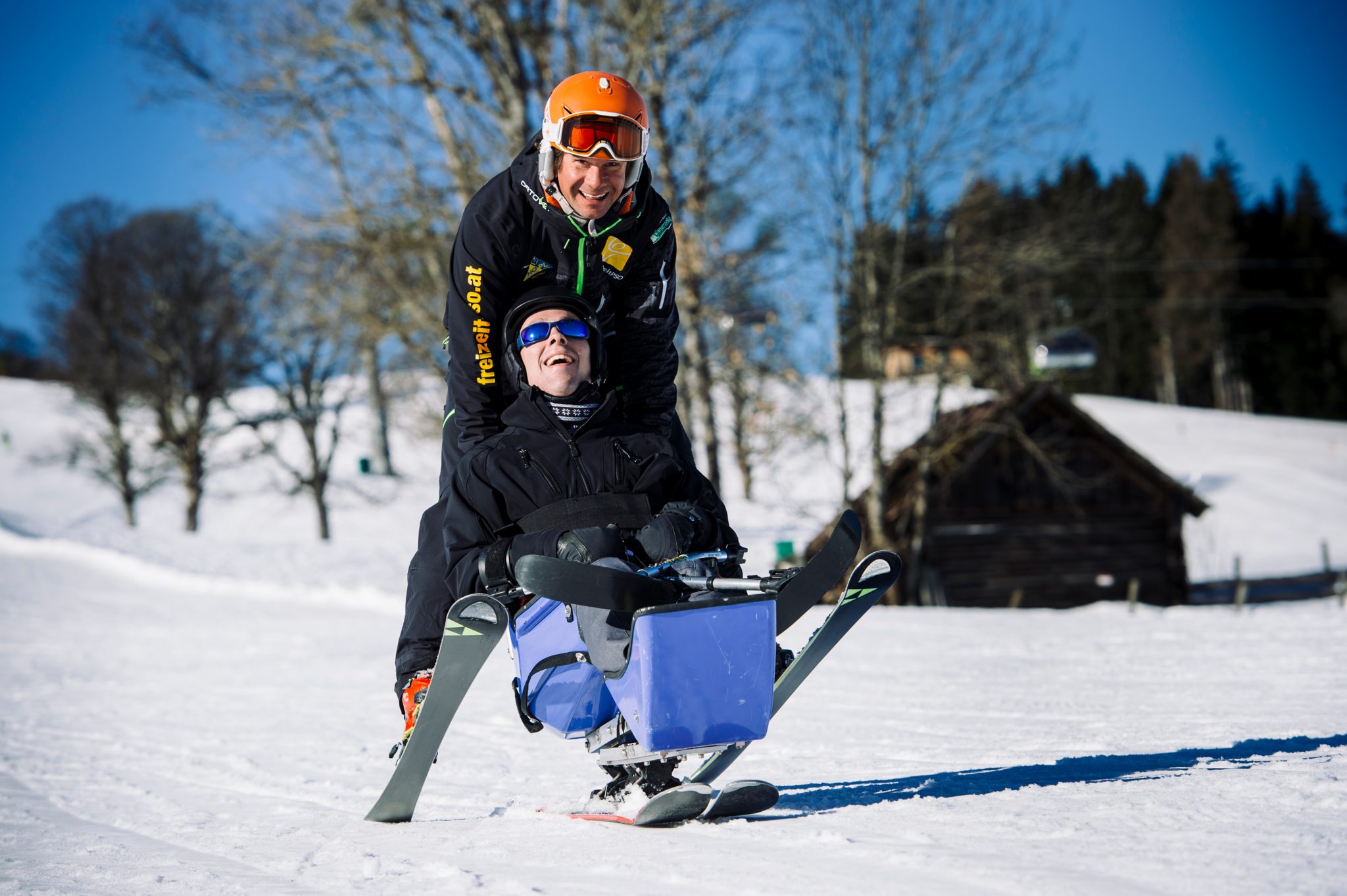
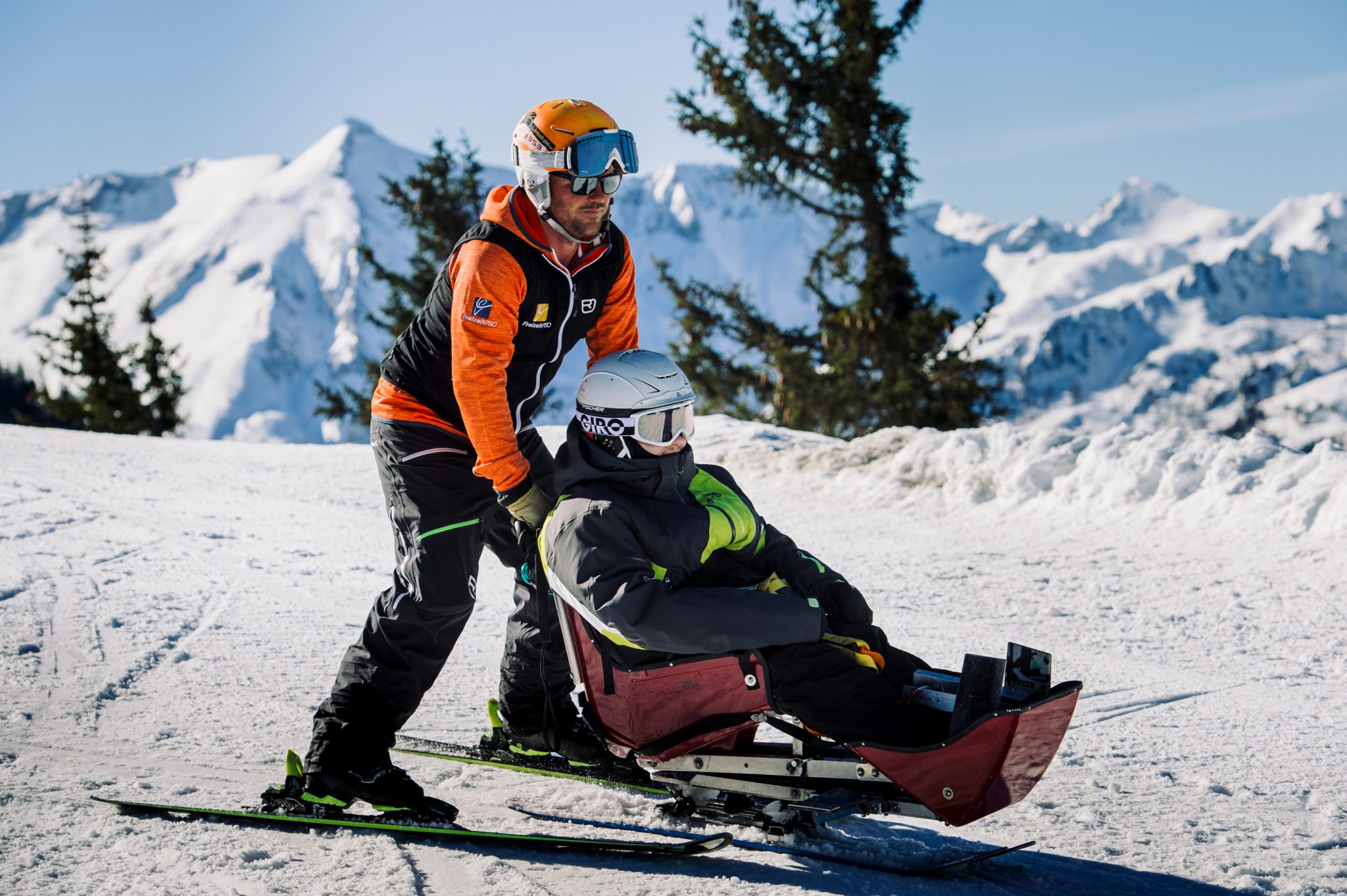
Bi-Ski – Bucket Assist
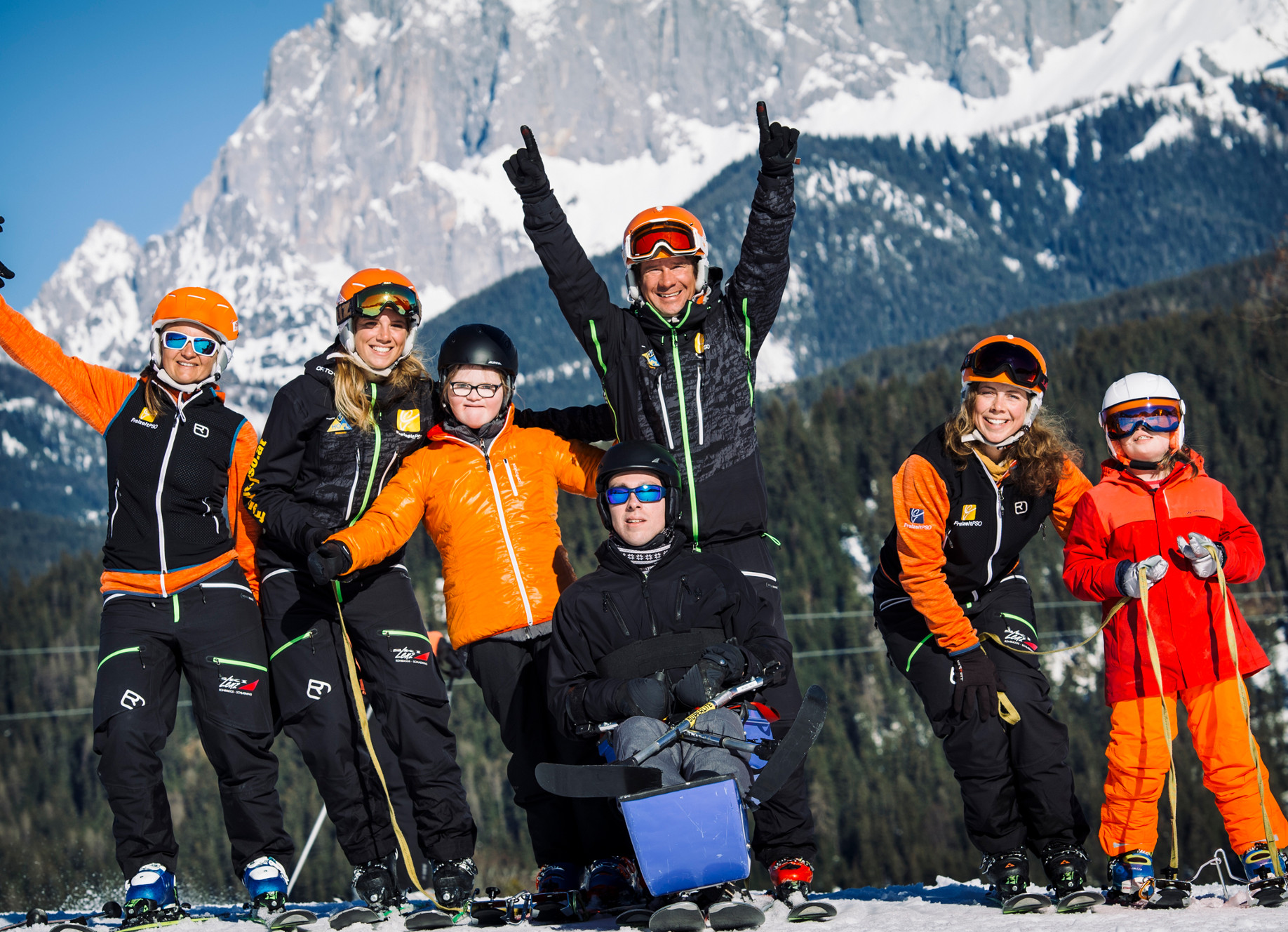
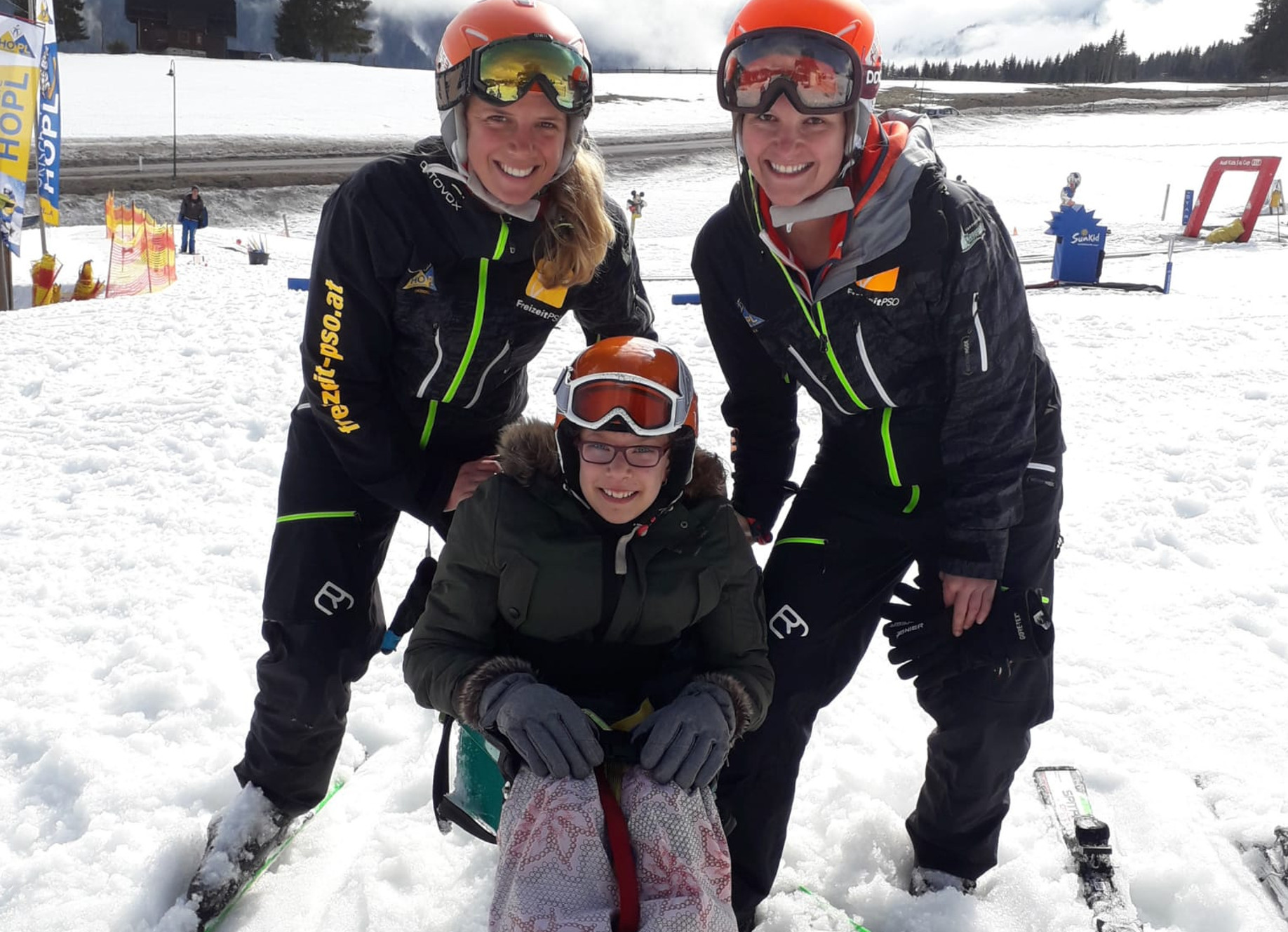
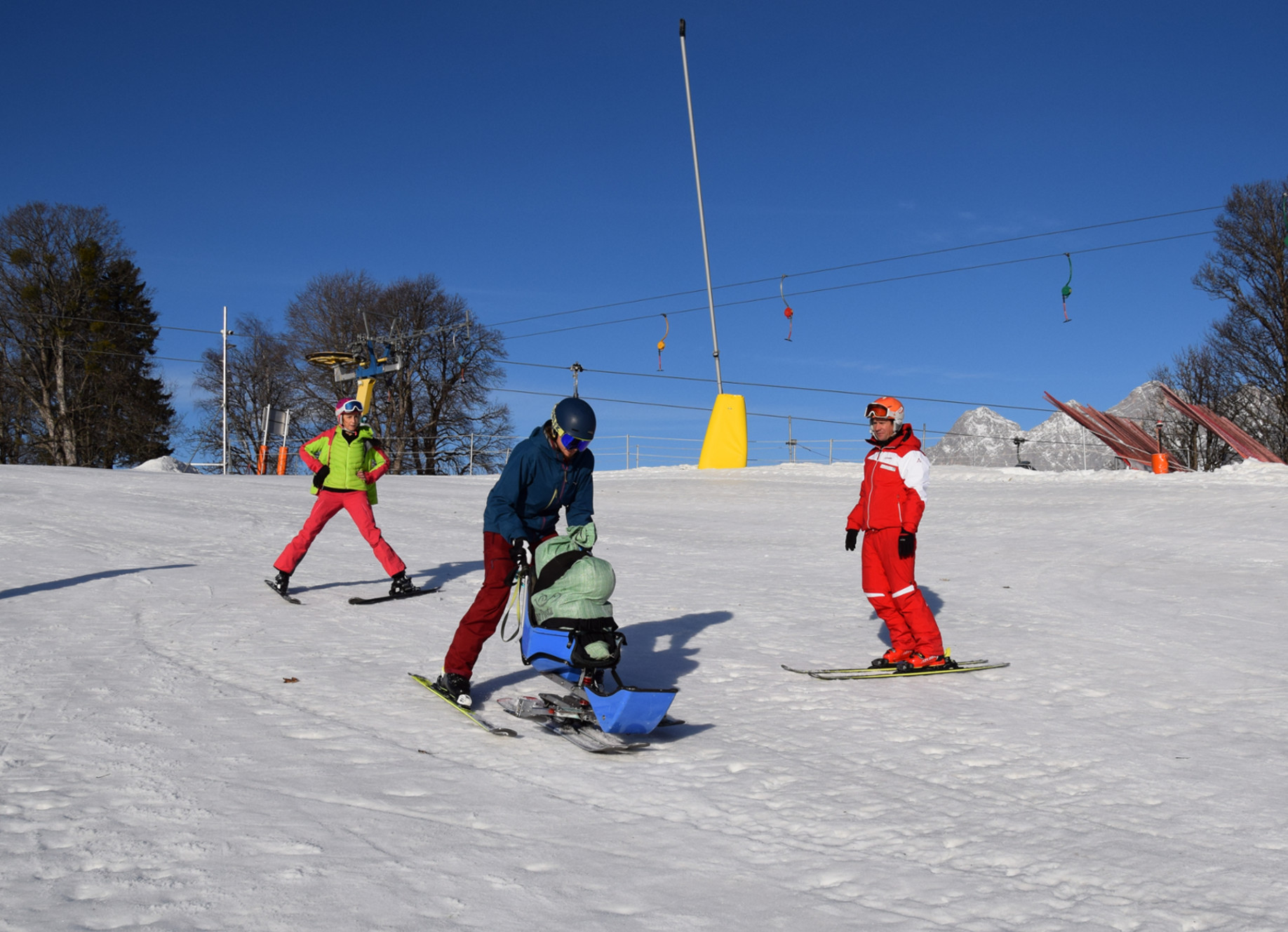
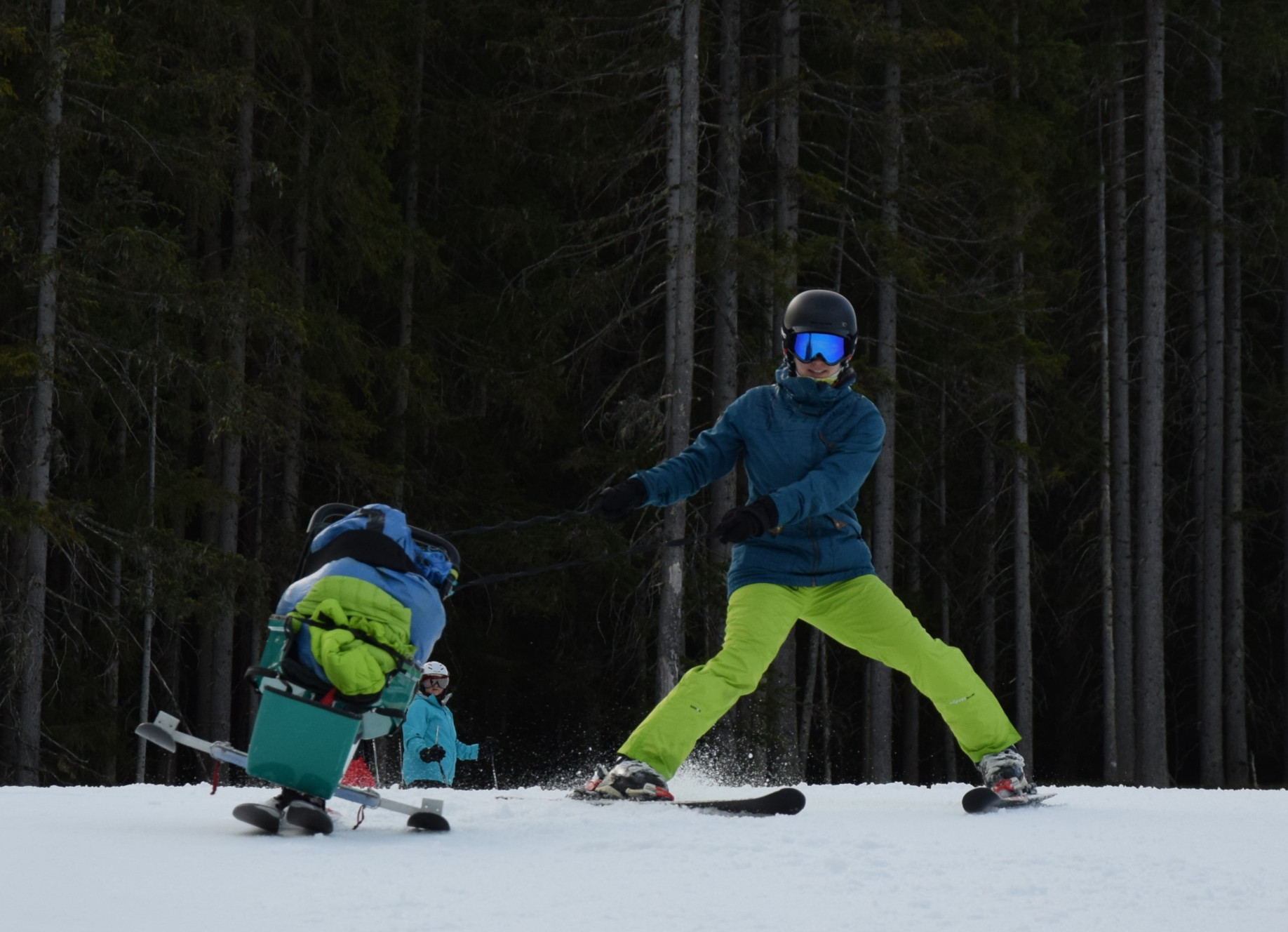
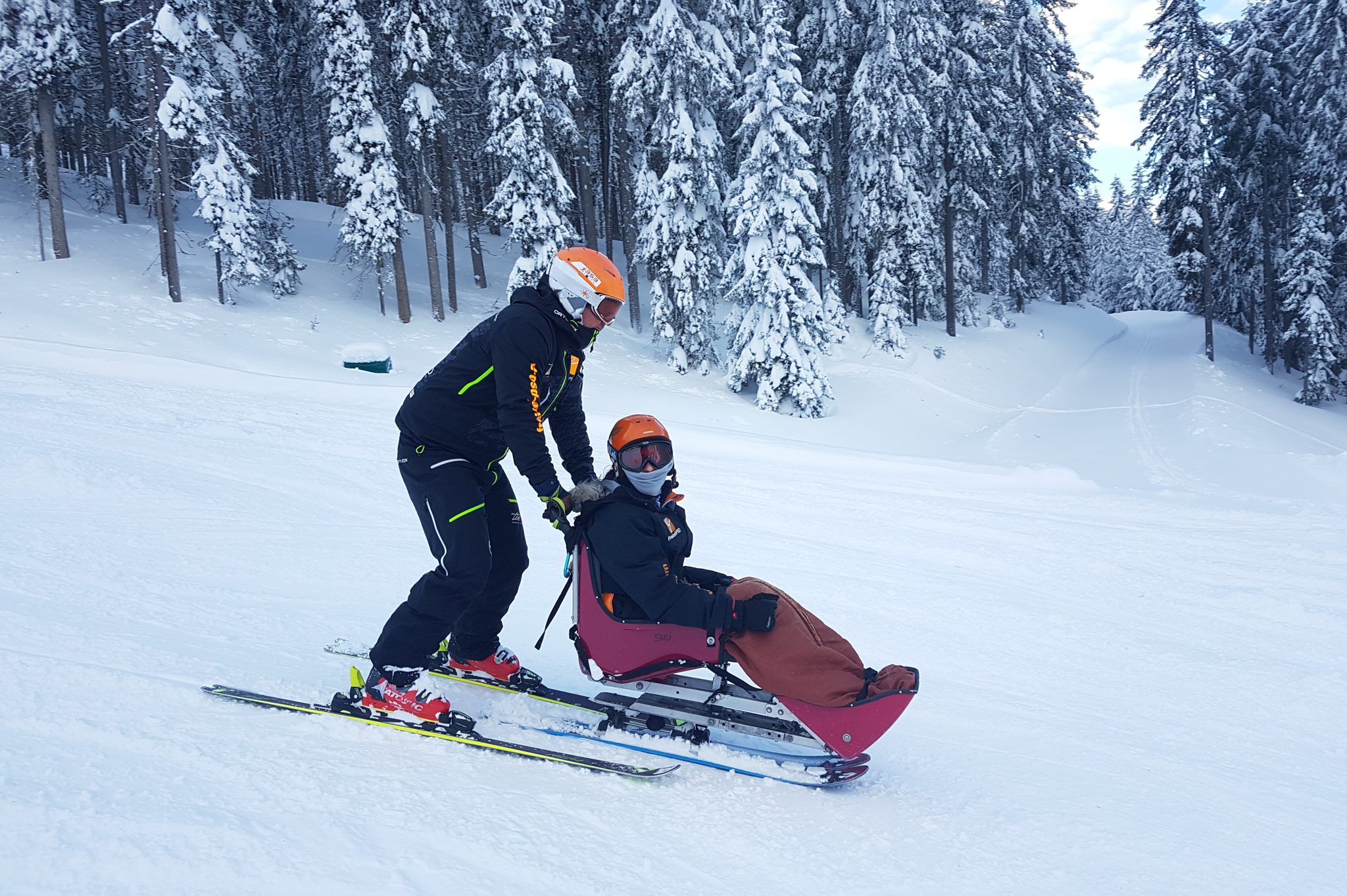
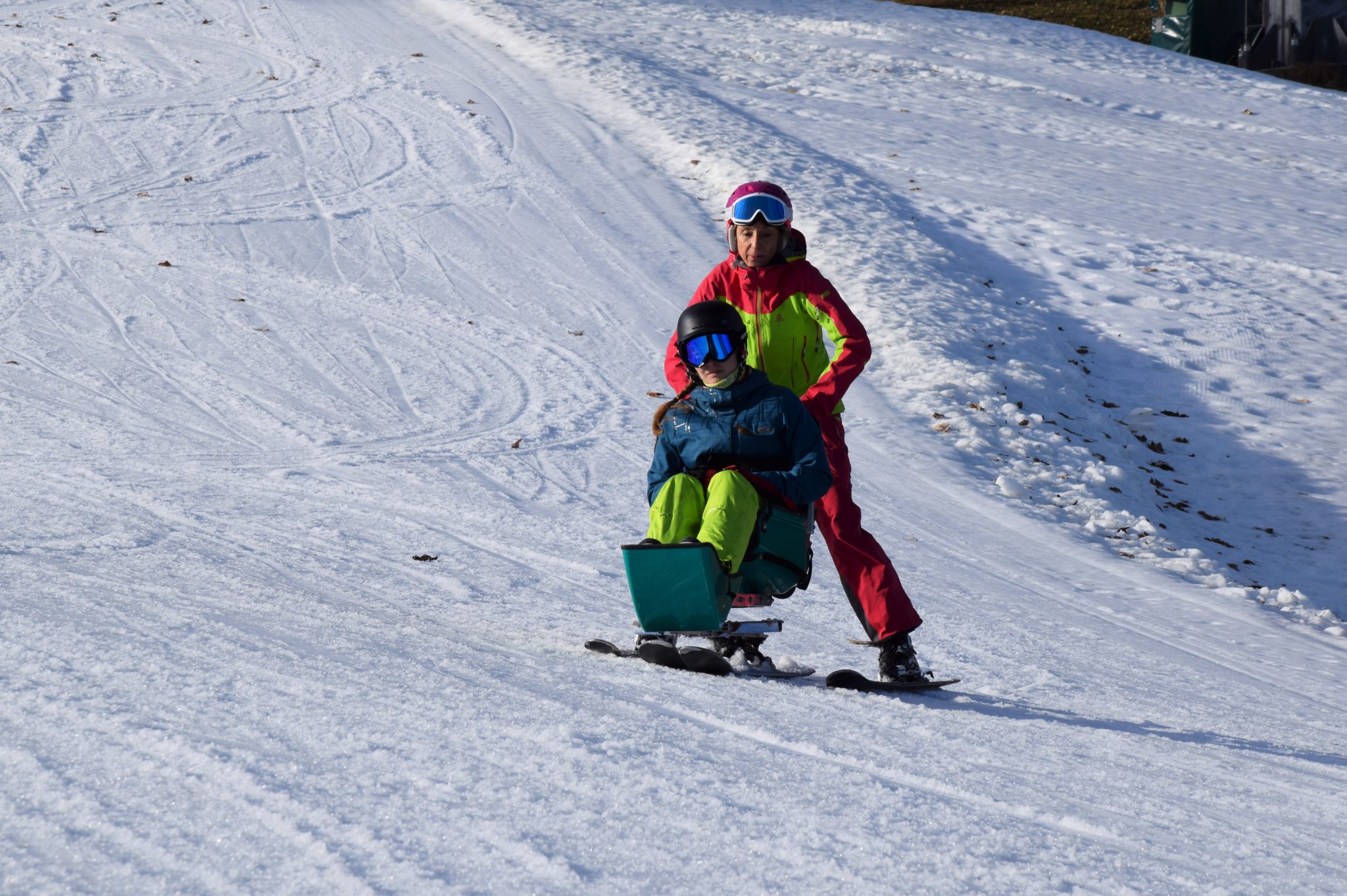
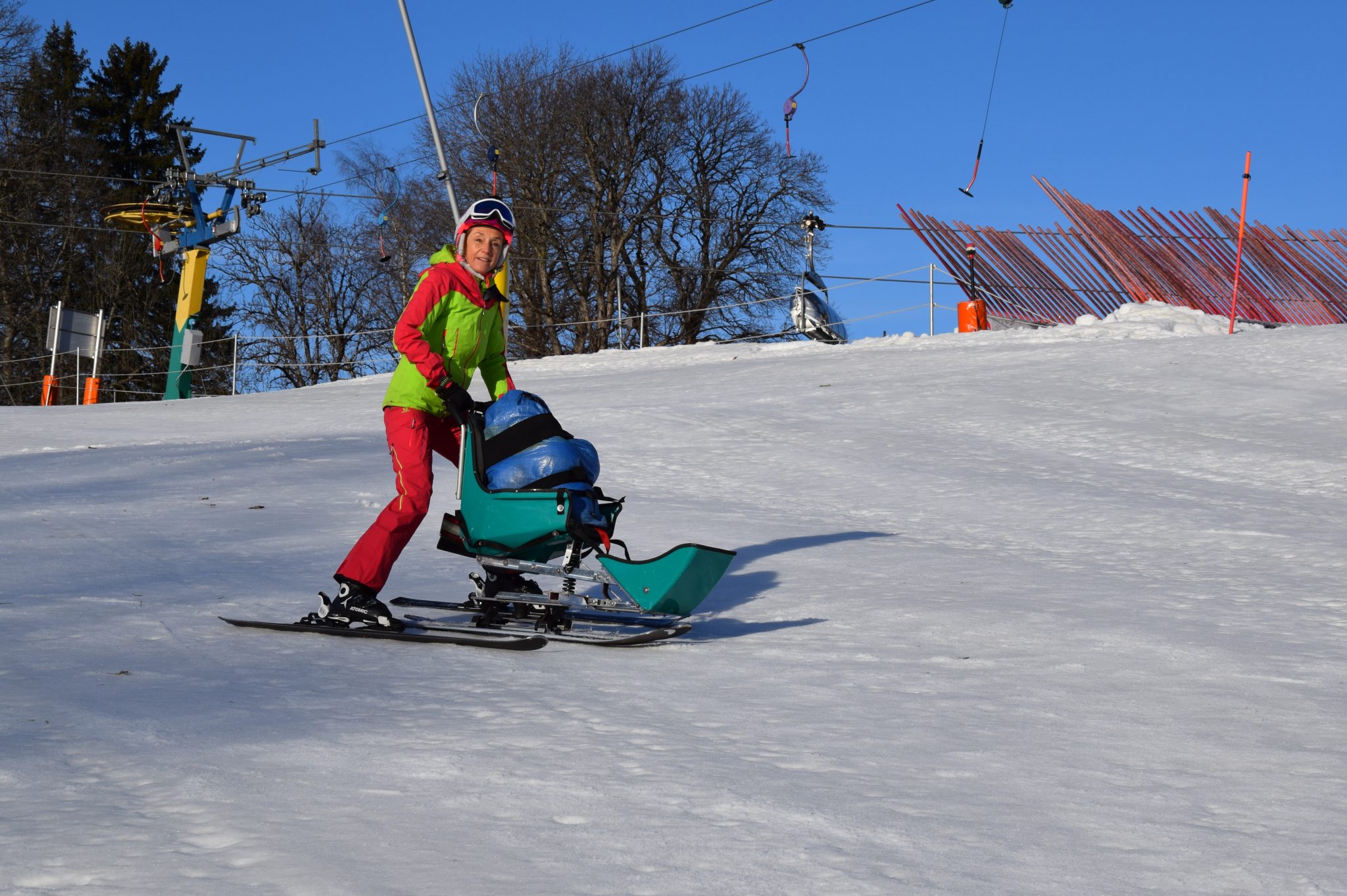
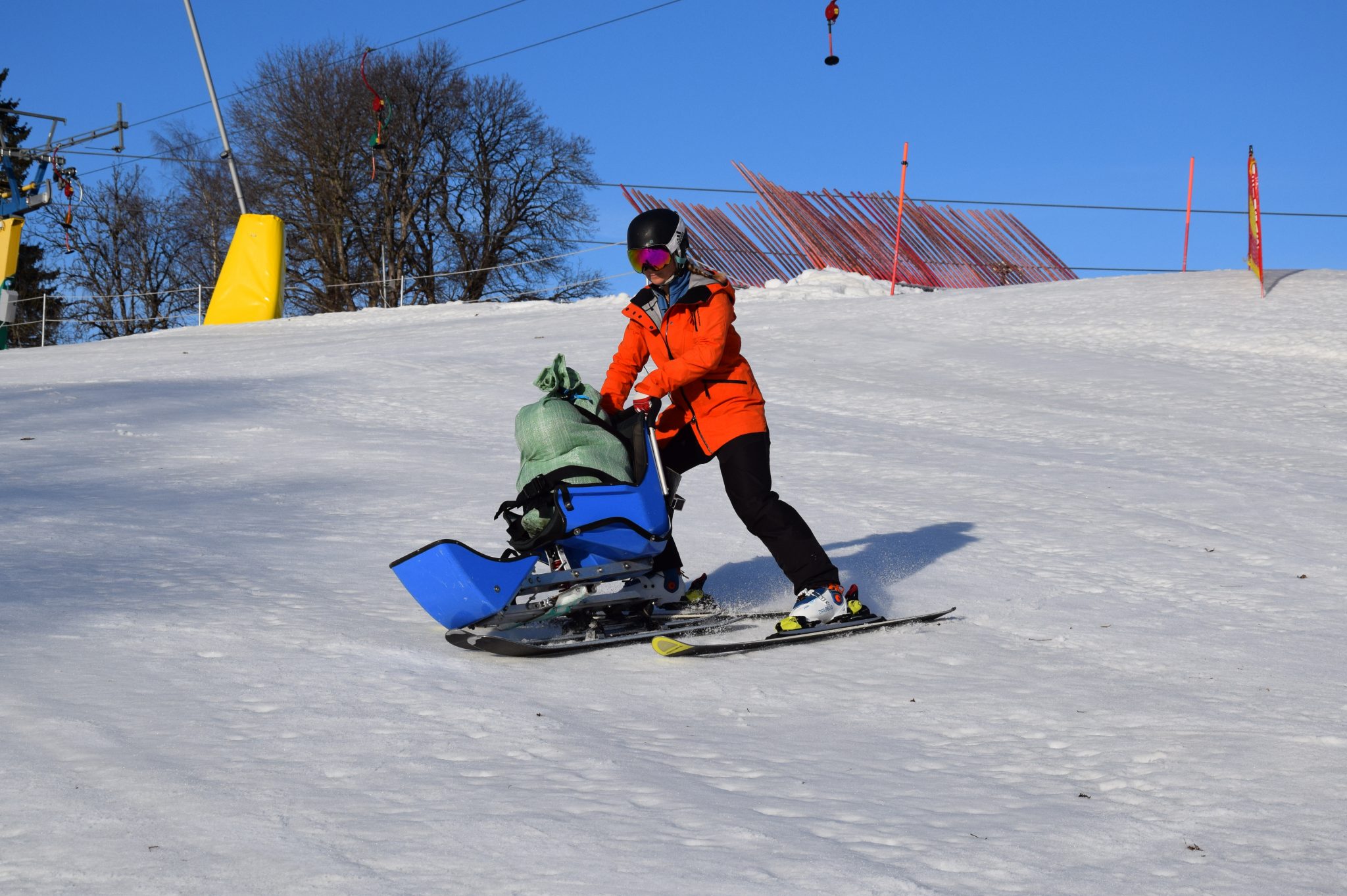
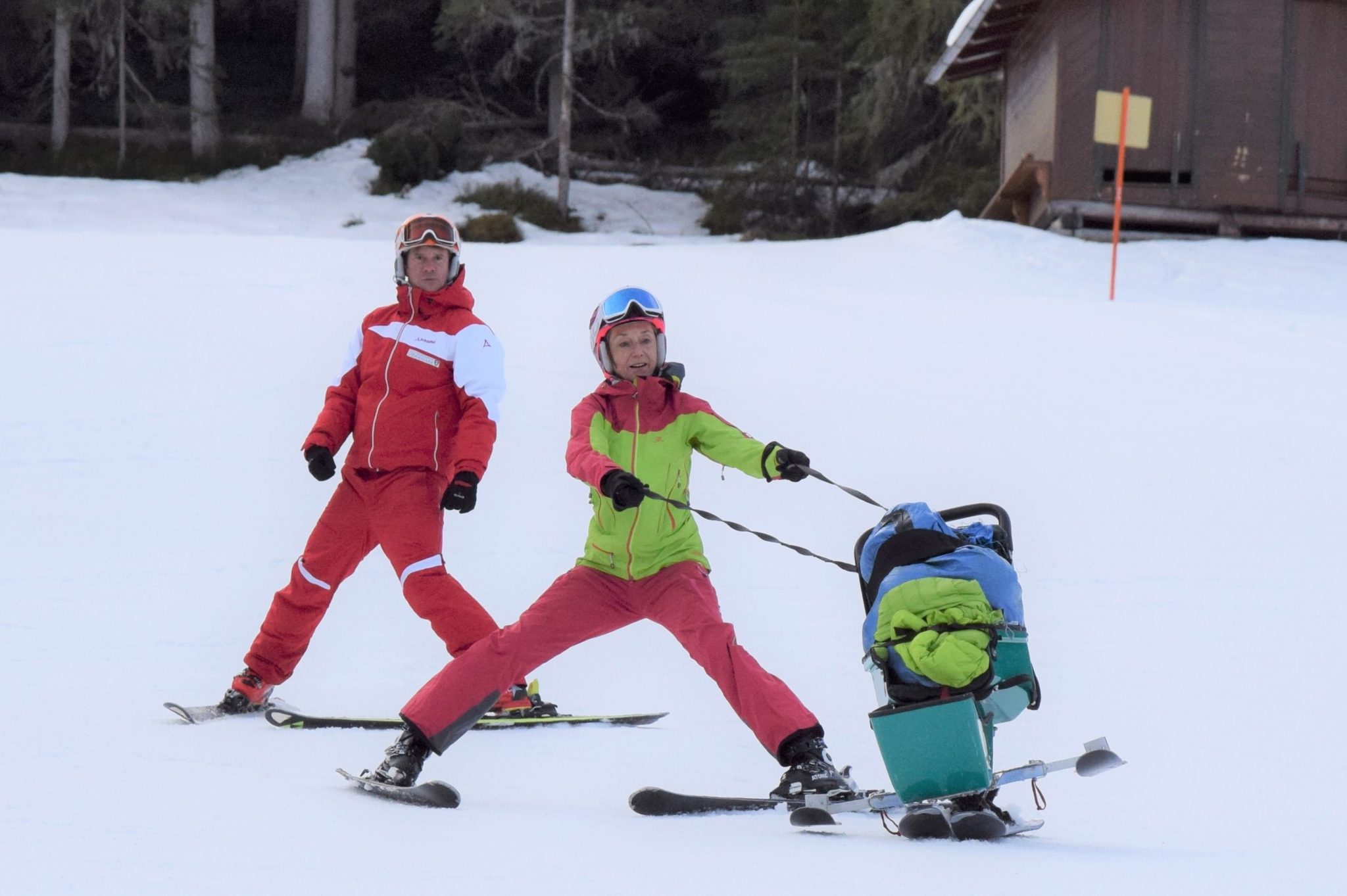
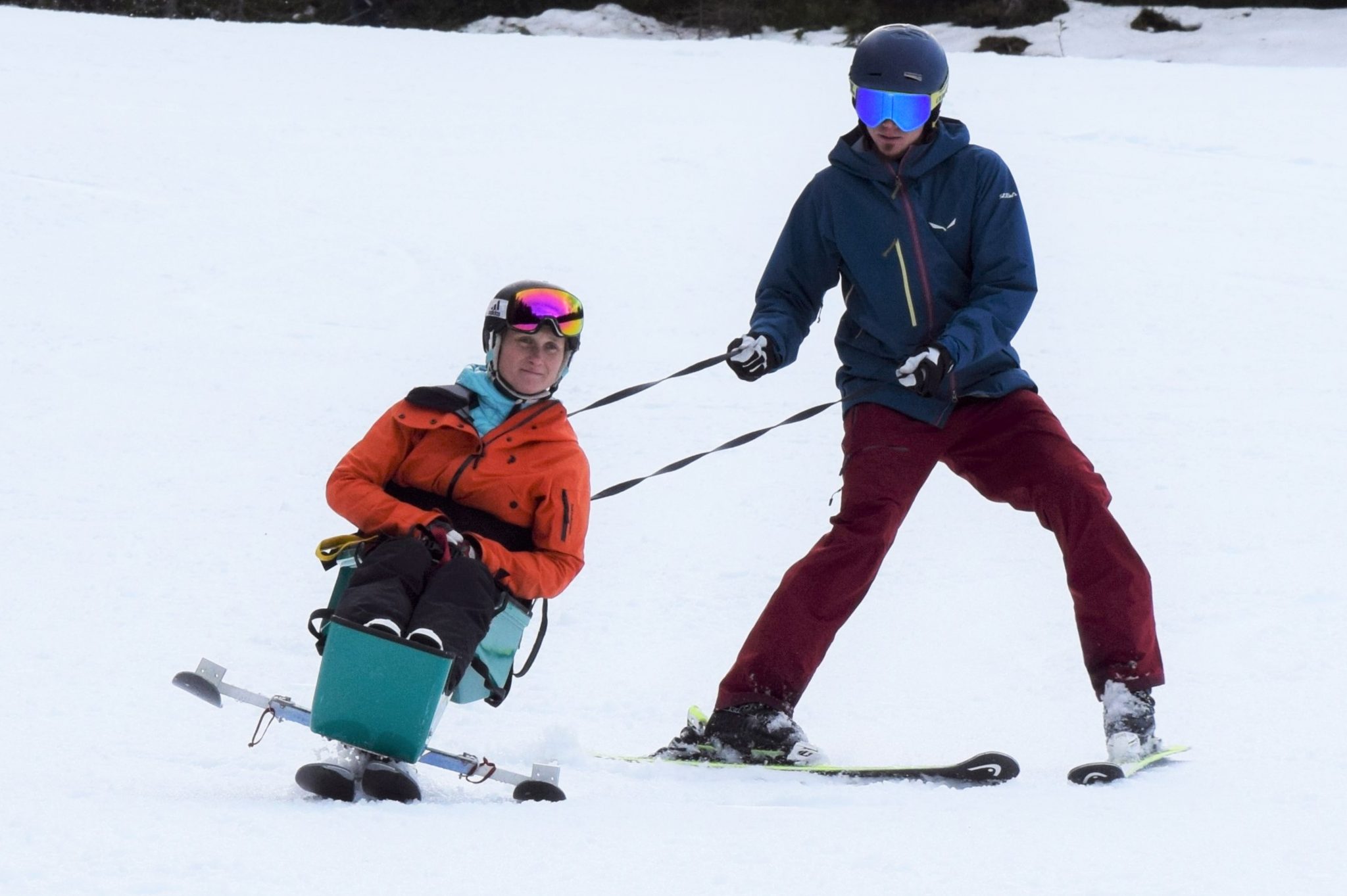
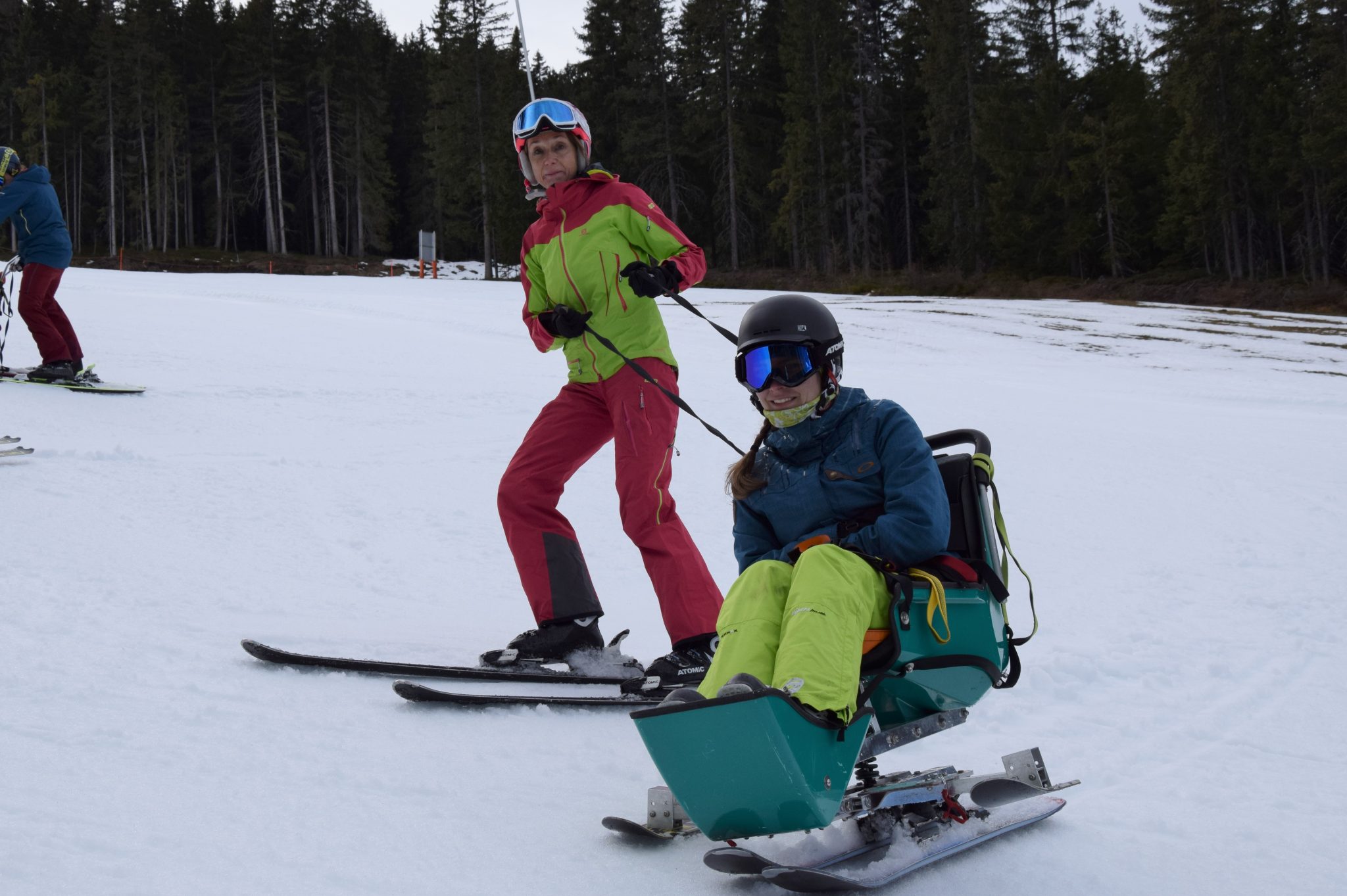
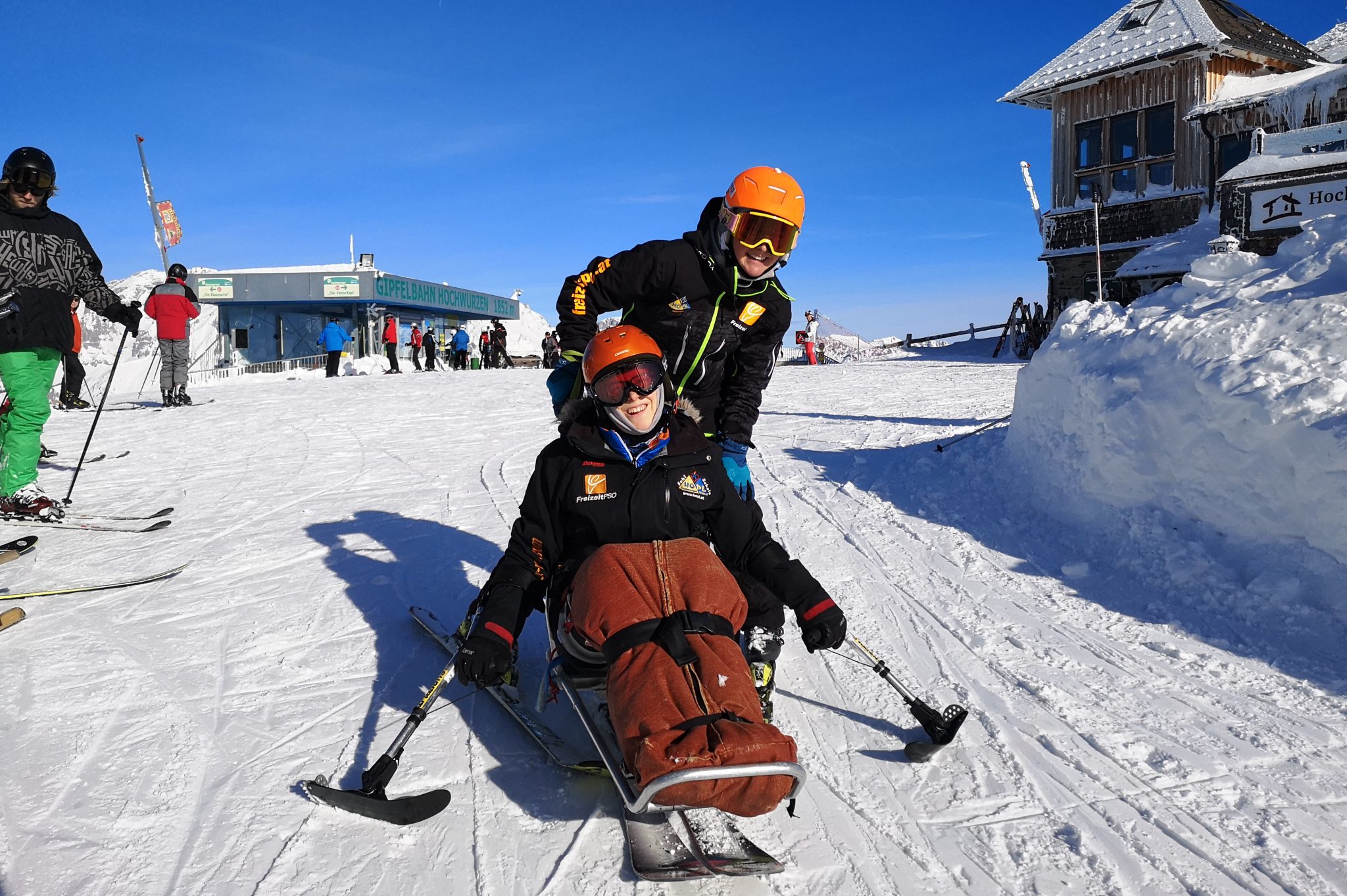
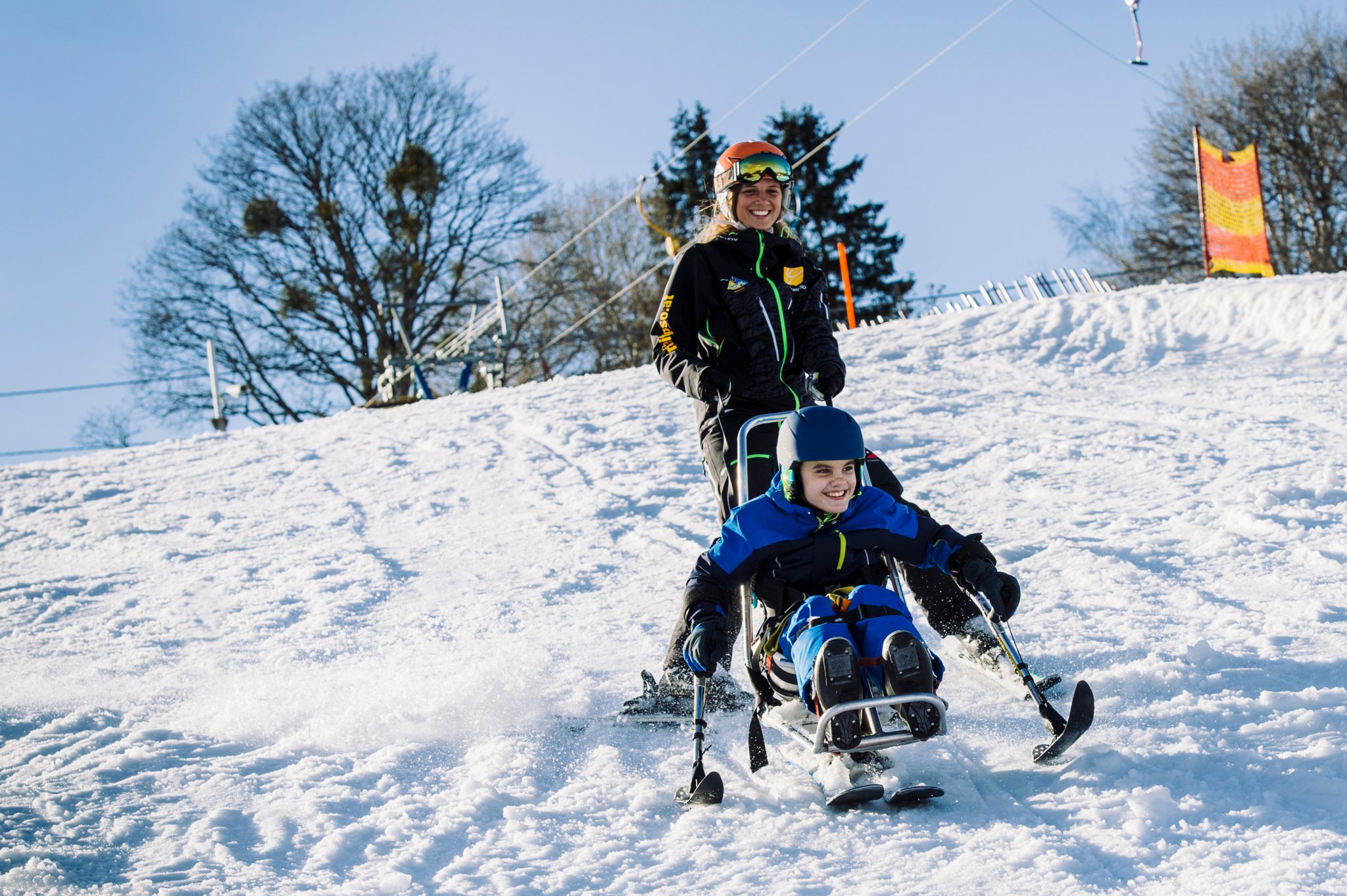
In order to assist people with disabilities to bi-skiing, the sub-discipline Bucket-Assist is usually chosen. In this variation of bi-skiing, the adaptive ski trainer drives directly behind the seat ski, holds the bi-ski in place and steers it directly. The participant can support the steering process by leaning with the ski. Some people can only ski in this discipline because of their disability.
During the course this method is learned safely.
Bi-Ski with fixed outriggers
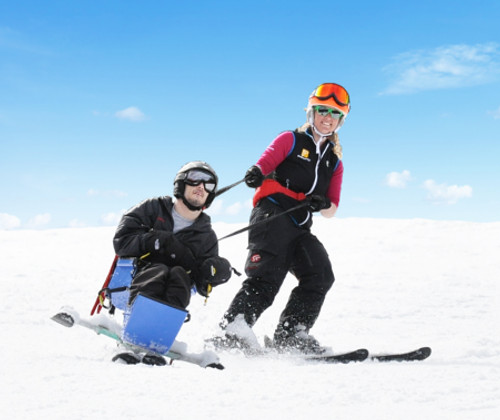
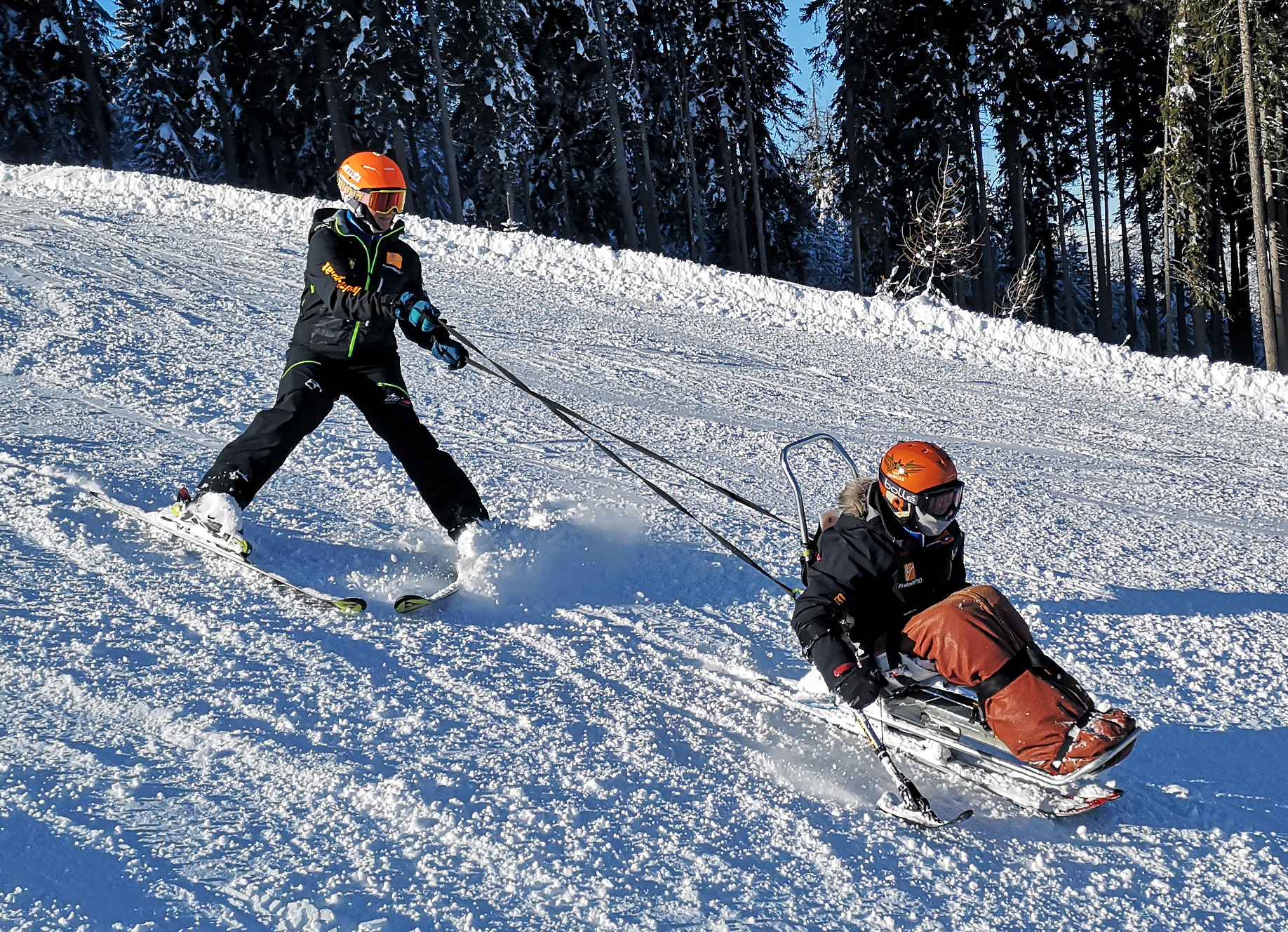
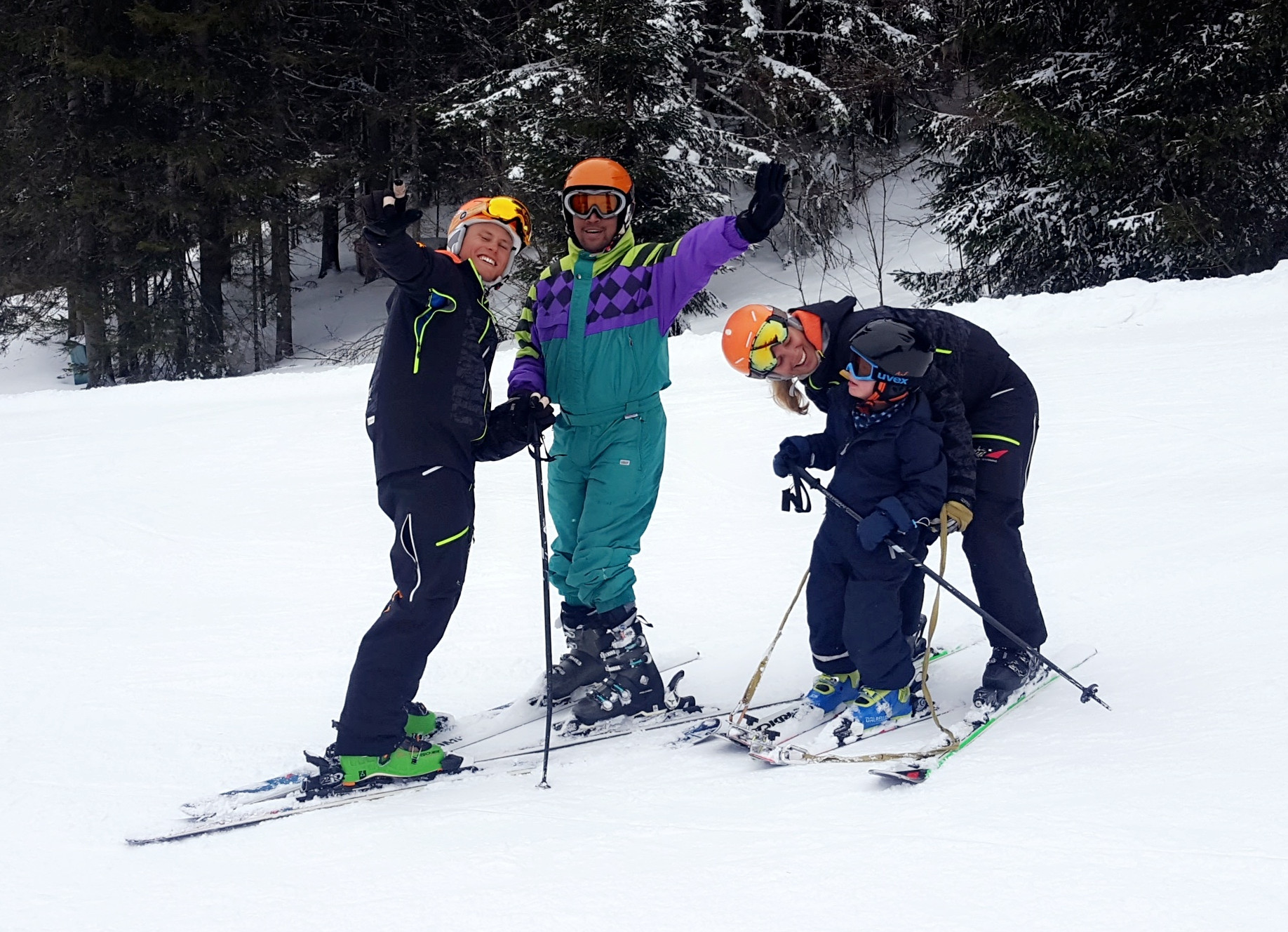
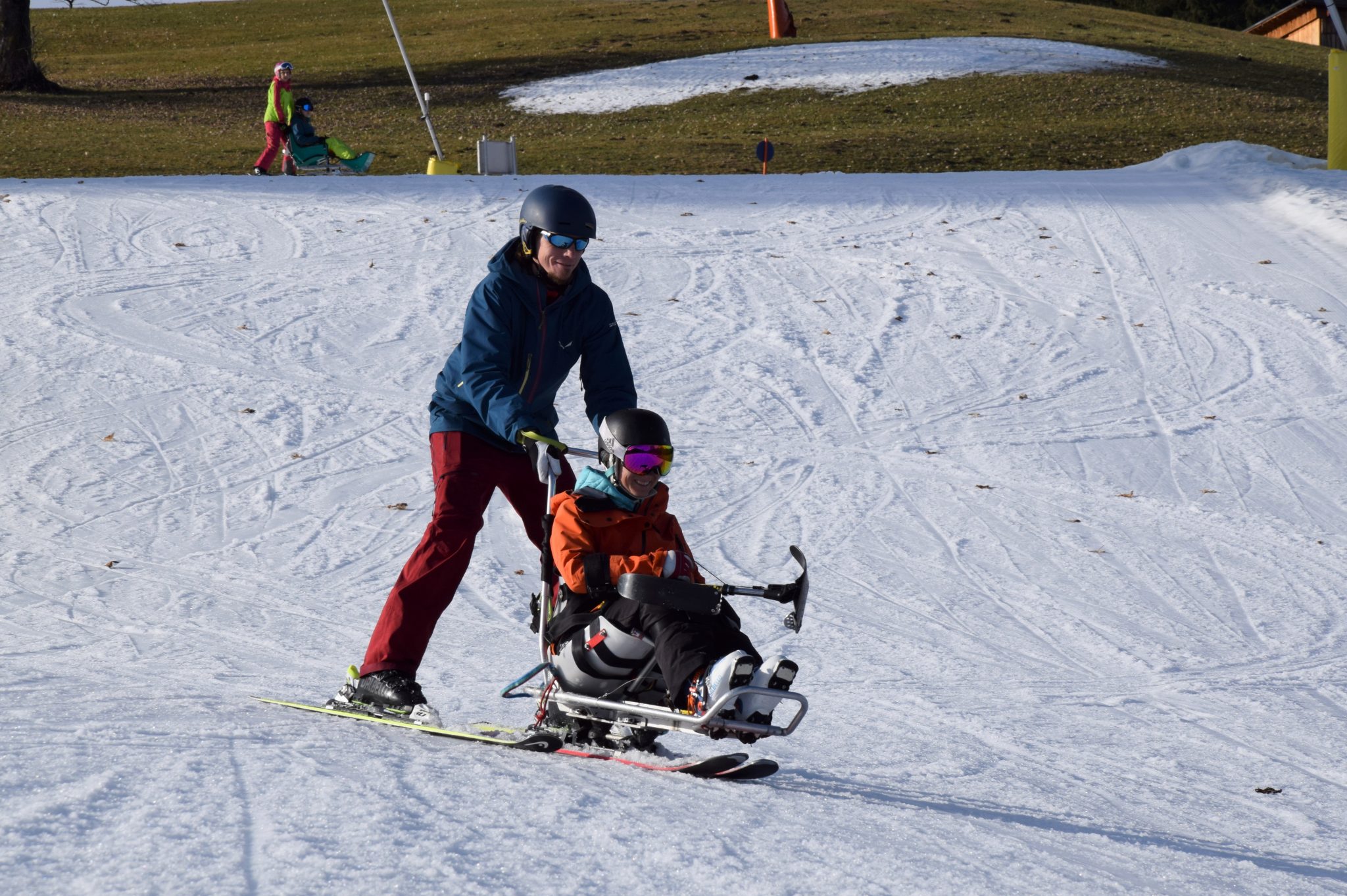
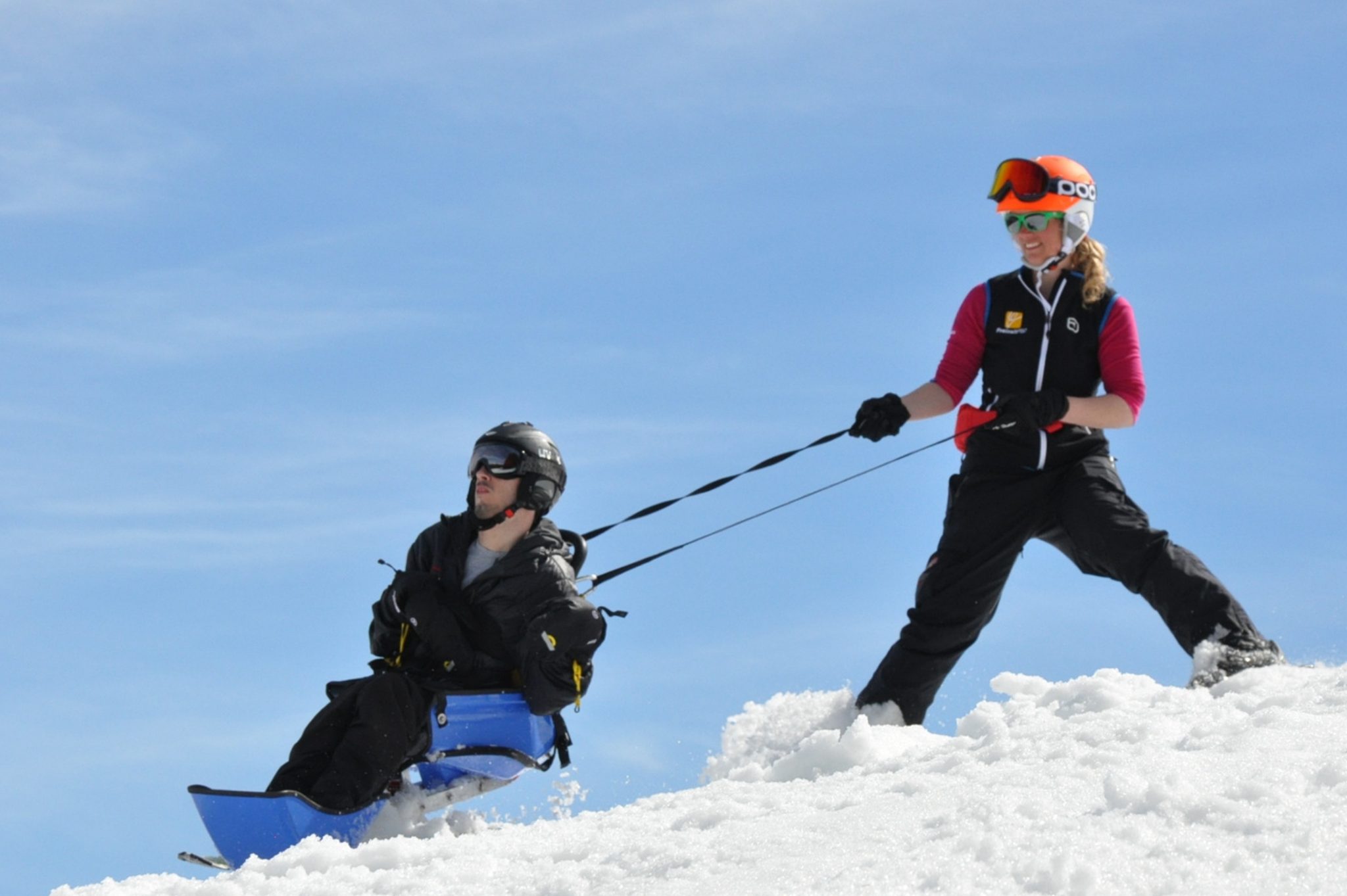
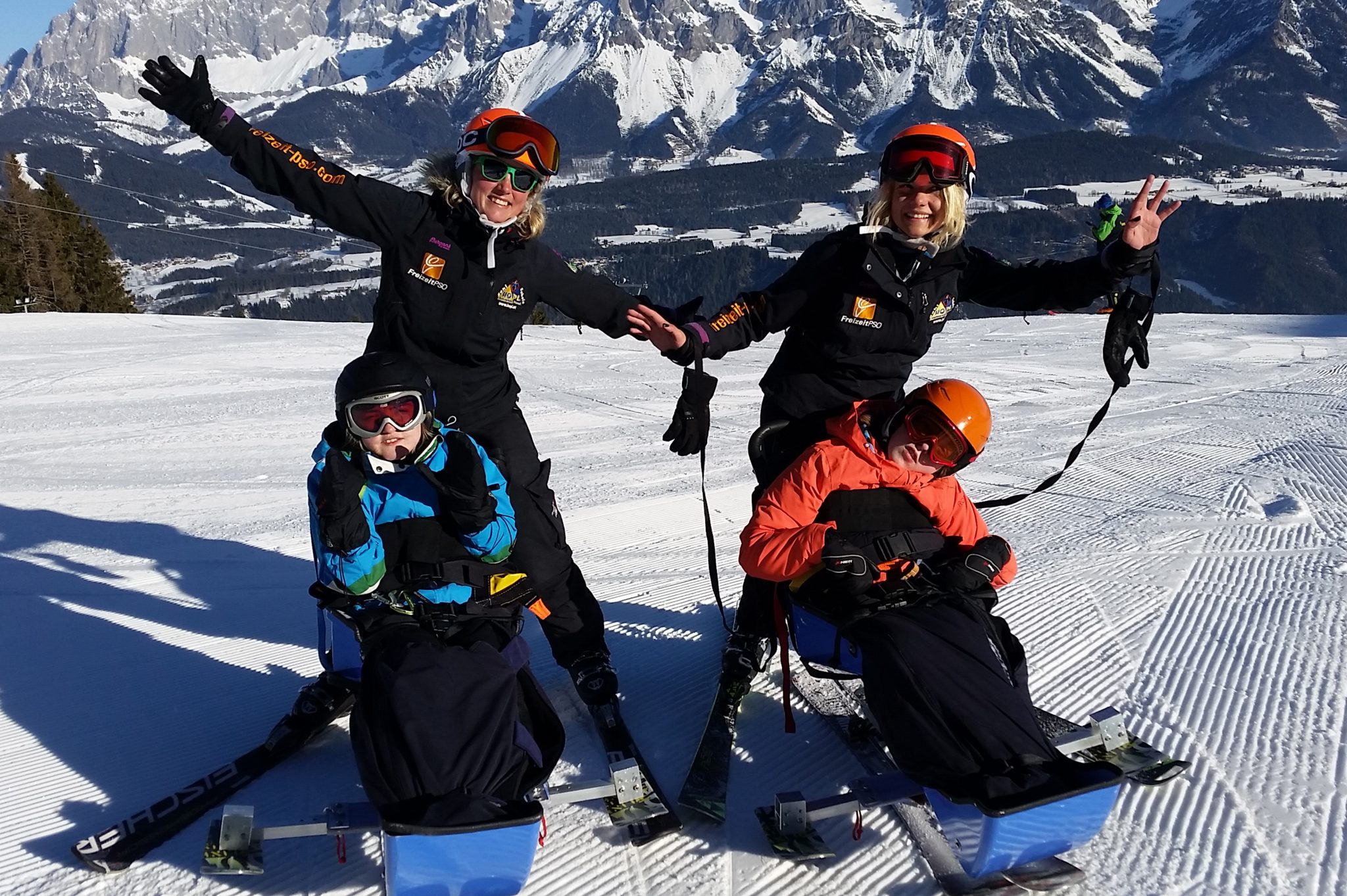
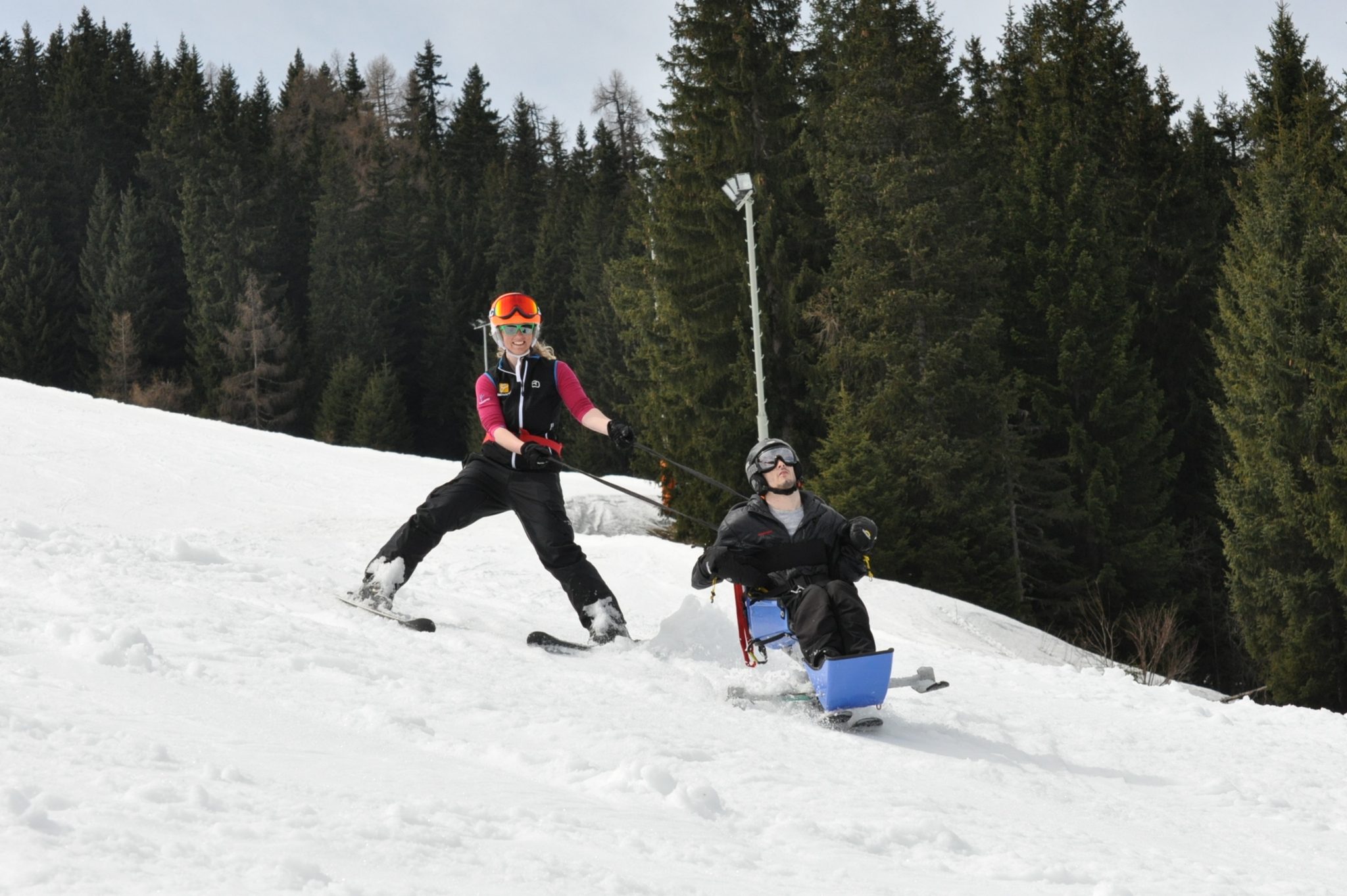
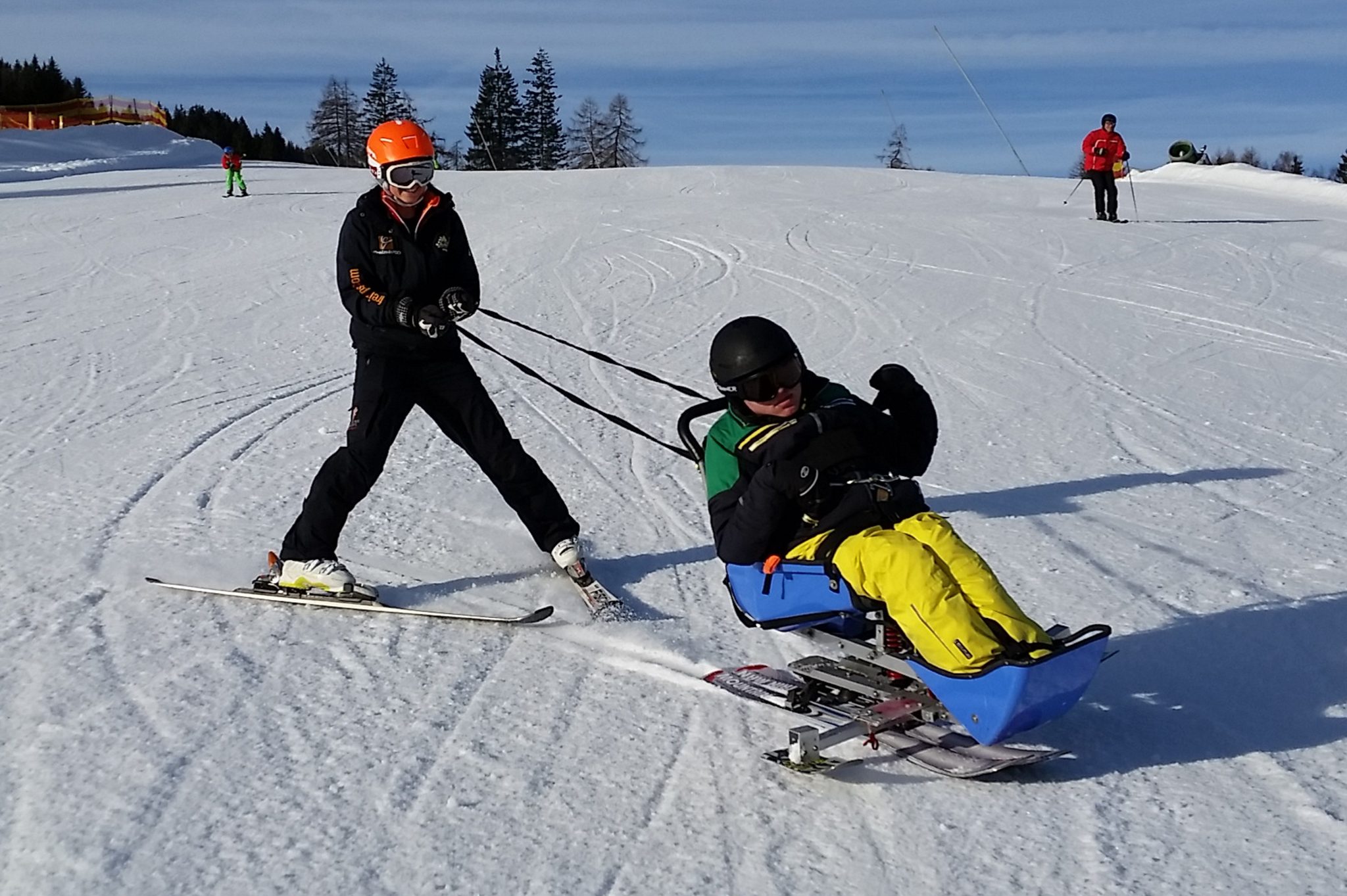
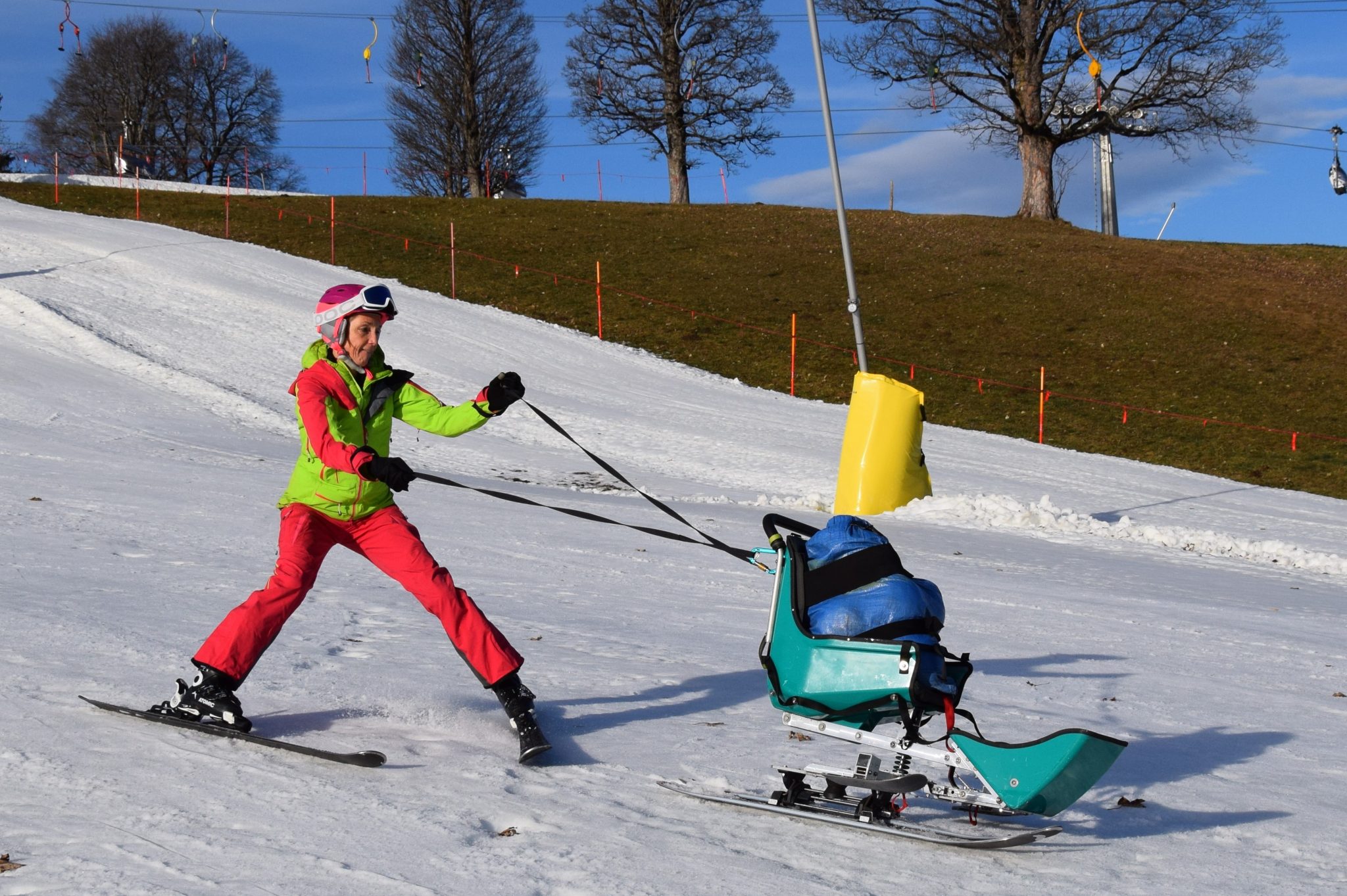
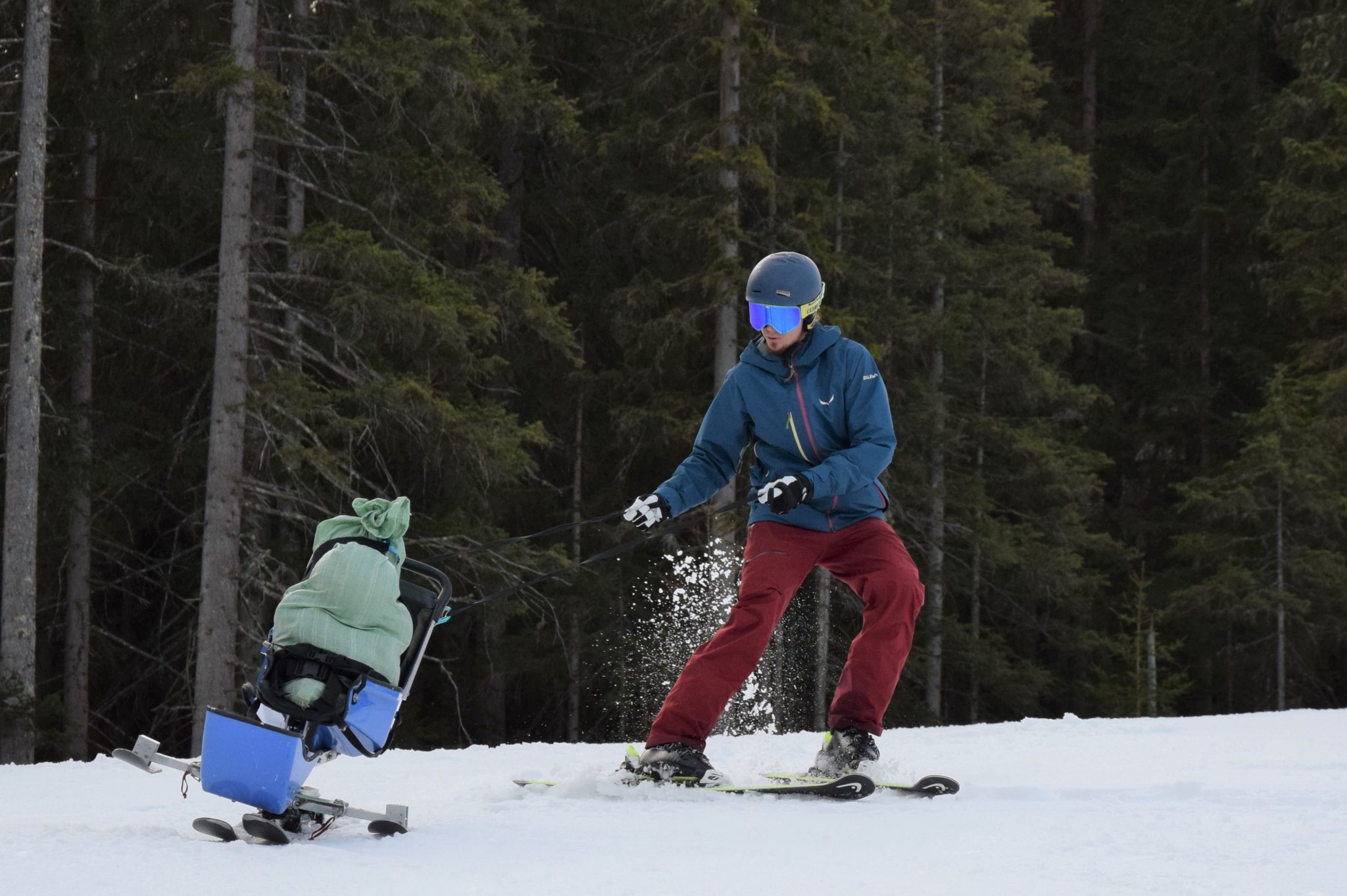
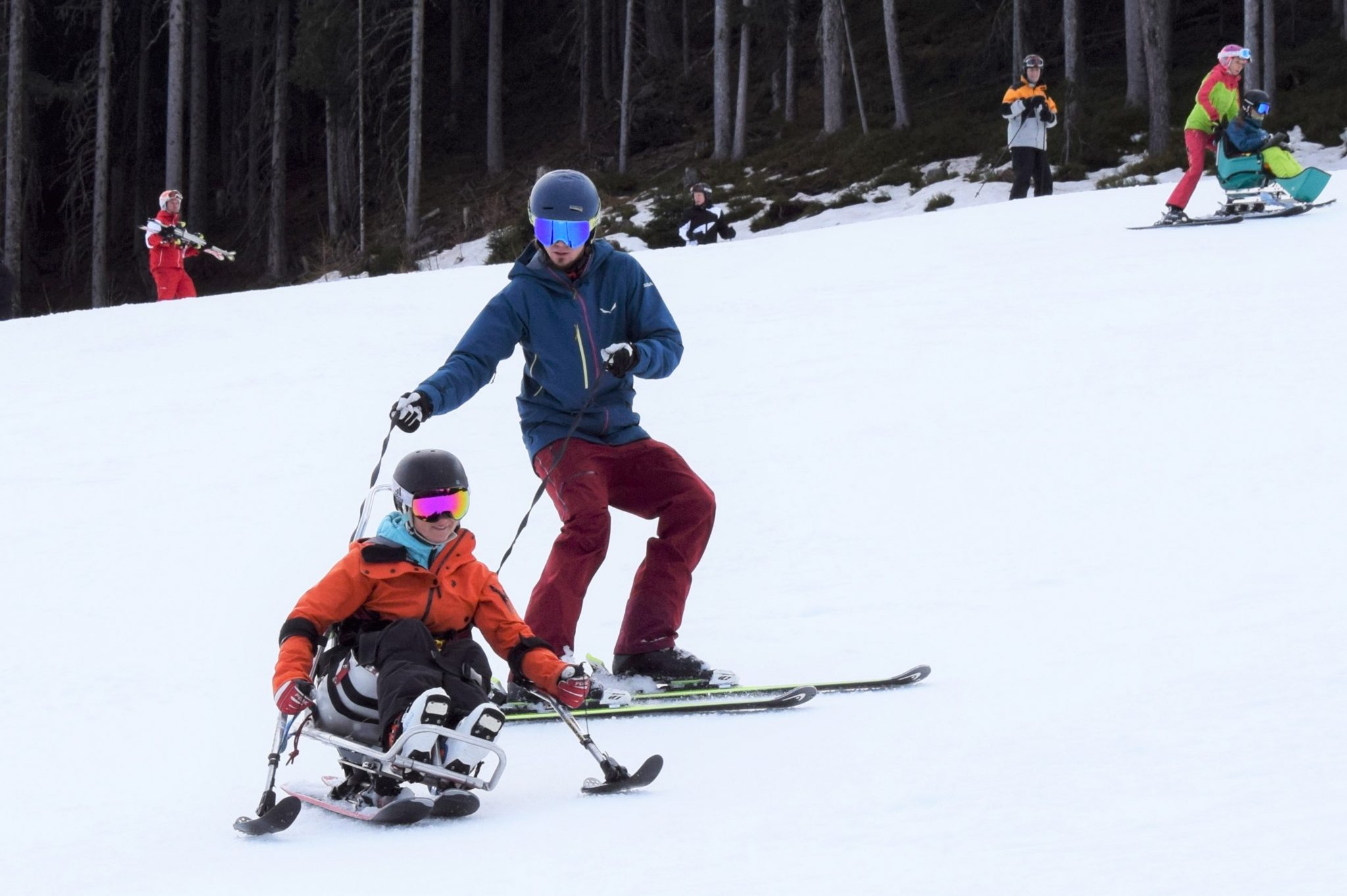
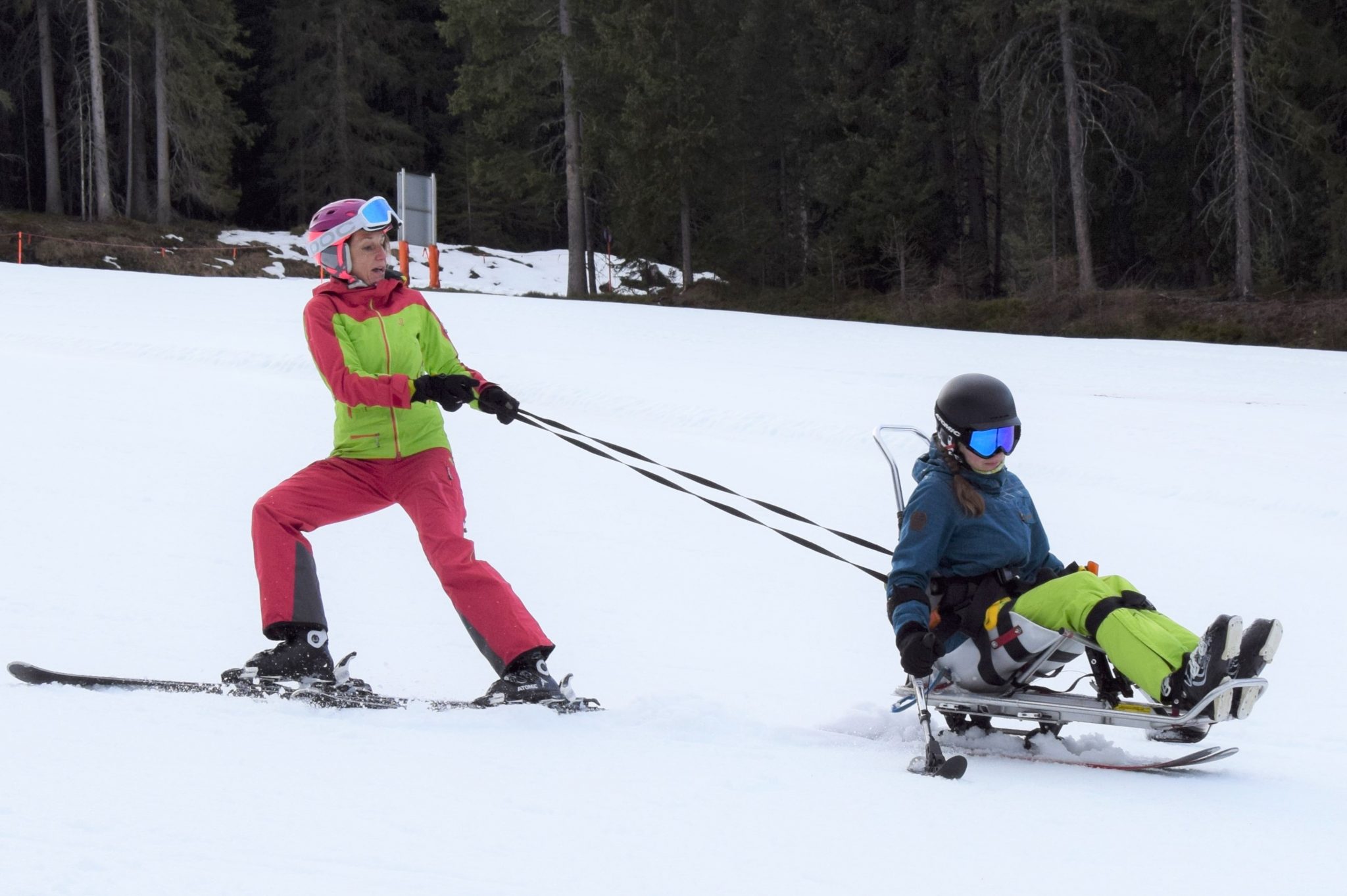
Persons who are not able to hold crutch skis with their hands due to their handicap have the possibility to ski with so-called fixed outriggers. The ski can be controlled, for example, by shifting its weight. The adaptive ski trainer is connected to the seat ski by lines and can thus assist the participant in steering and braking.
This method is learned safely during the course.
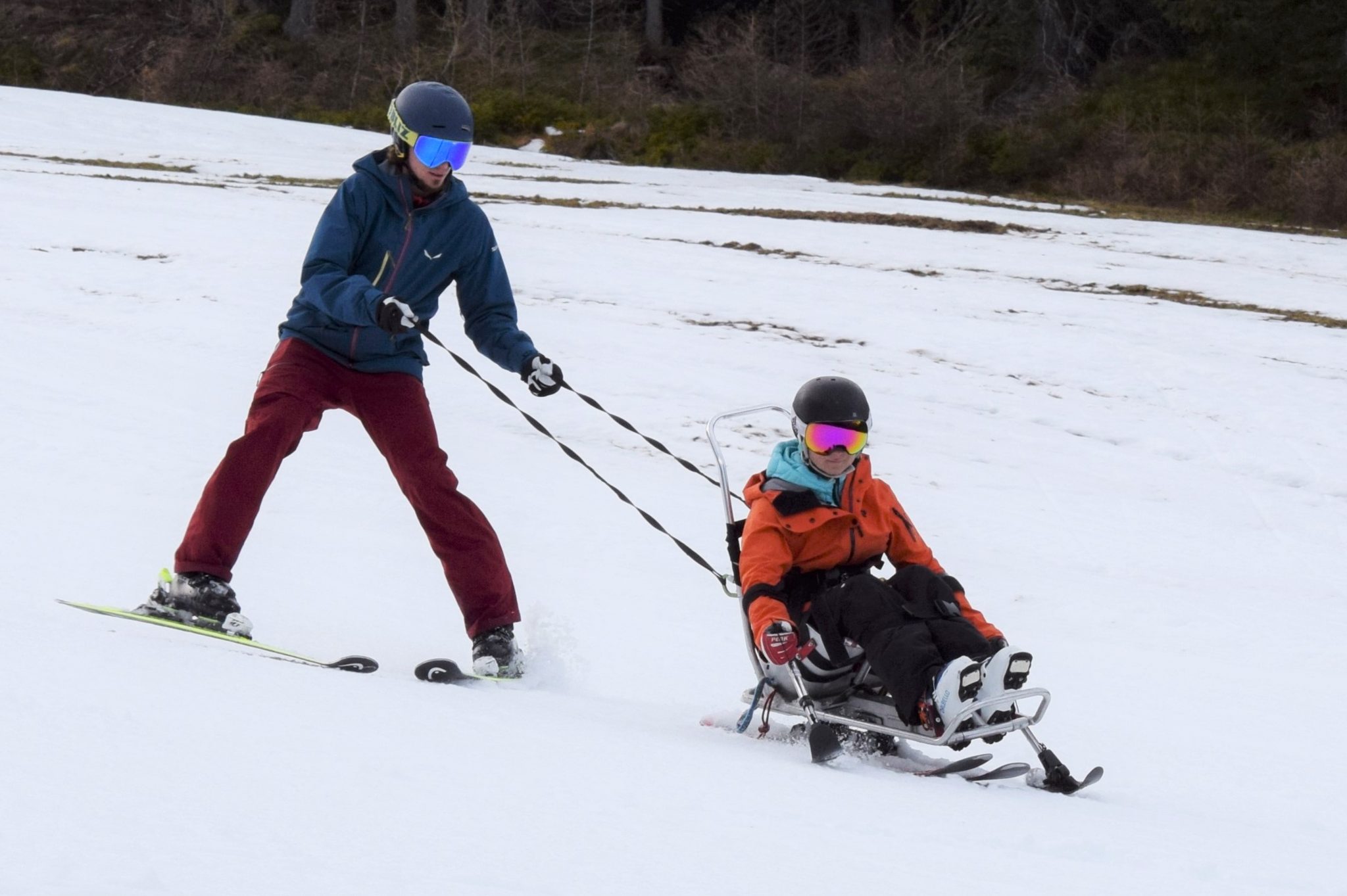
Bi-Ski with crutch ski
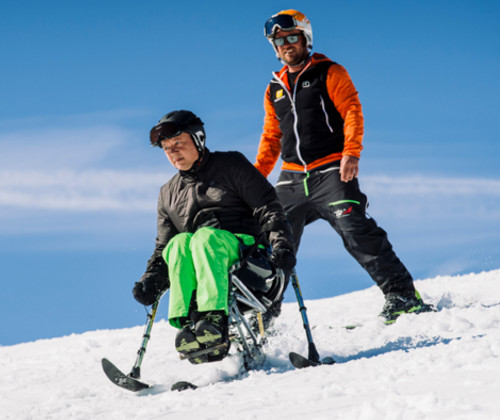
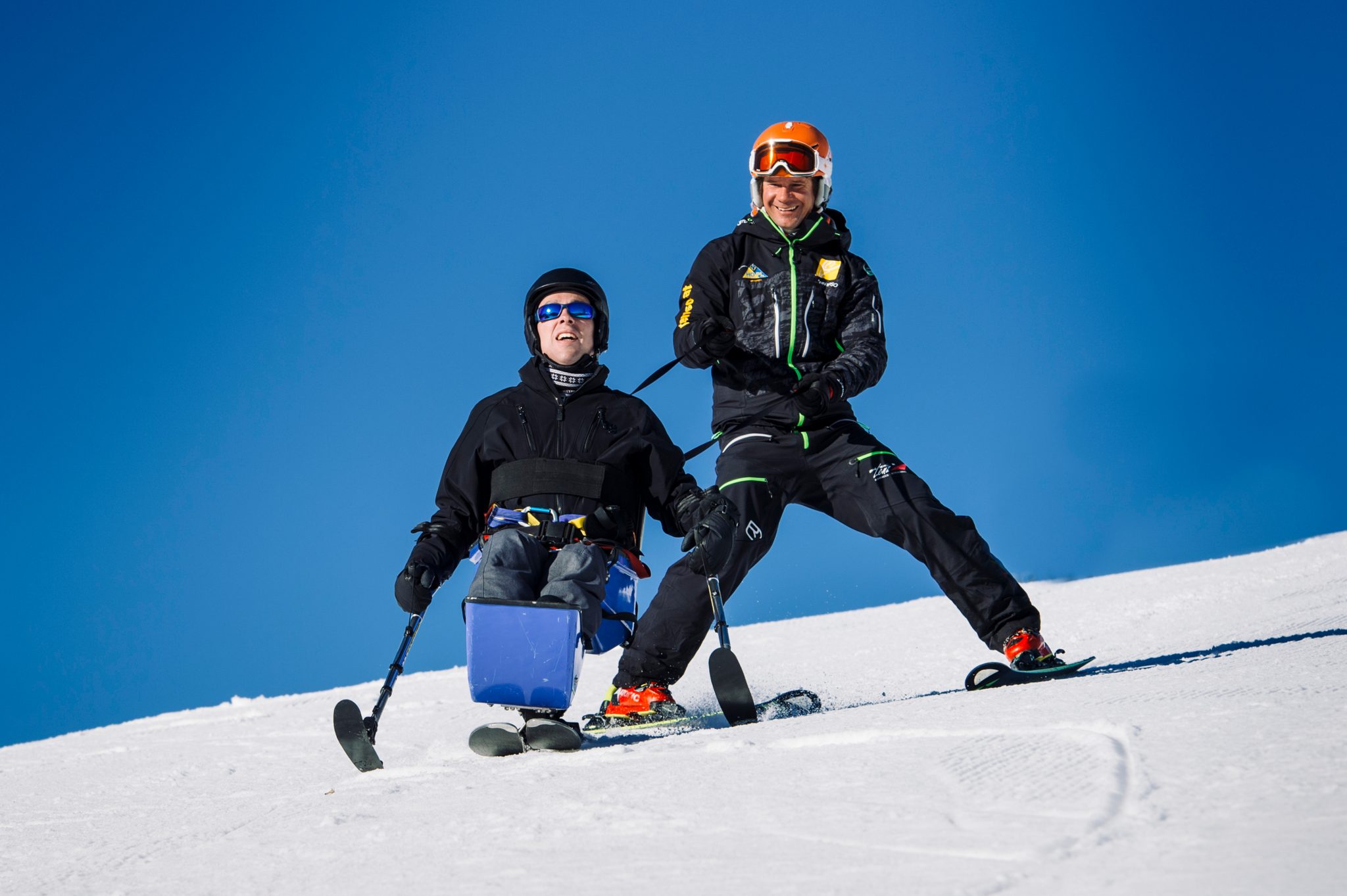
People who can hold crutch skis with their hands can use them to control the Bi-Ski. The adaptive ski trainer is connected to the seat ski by lines and can thus assist the participant in steering and braking.
This discipline is learned safely during the course.
Further offers
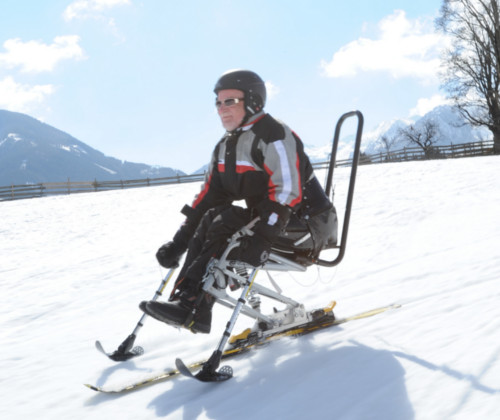
Adaptive Equipment rental
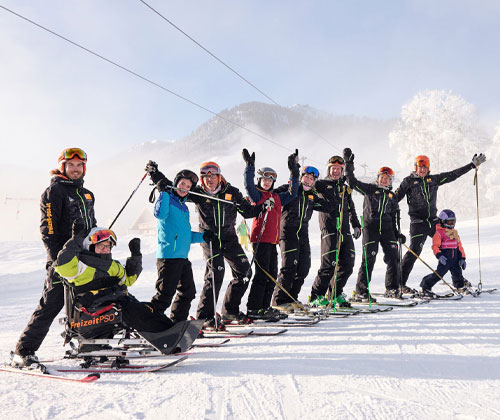
Adaptive skiing for people with disabilities
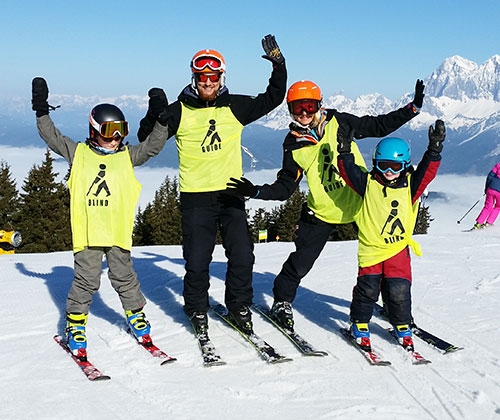
Helpertraining